
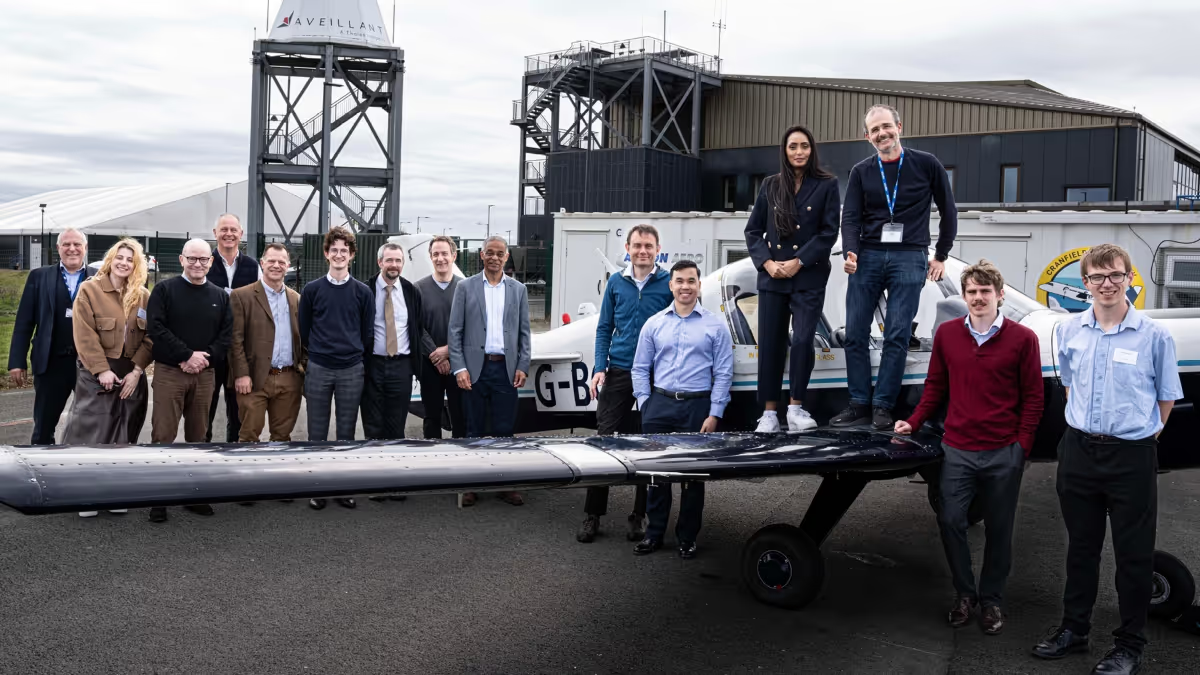
LONDON, U.K., April 21, 2026: TTP plc, alongside Viasat Inc., Thales, Dimetor and the European Space Agency (ESA), has completed successful flight trials at Cranfield University using the National Flying Laboratory Centre’s Bulldog light aircraft as part of the Iris RPAS programme.
The initiative contributes to a coordinated effort to build real-world evidence around trusted, resilient connectivity for beyond visual line of sight (BVLOS) uncrewed aircraft operations.
The trial forms part of the wider Iris airspace modernisation programme, funded by ESA and industry partners, focused on enabling the safe integration of uncrewed aircraft into non-segregated airspace through trusted communications. The ongoing flight trials are explicitly evidence-building, designed to observe how different connectivity elements can work together within a multi-link framework under realistic operational conditions.
As BVLOS operations scale, highly reliable command-and-control links are a critical prerequisite for safety. The ESA Iris RPAS trials explore how multi-link connectivity models can support continuity, integrity, availability and trust in shared airspace.
A secure, reliable command and control link is essential for BVLOS operations. As part of the IRIS programme, TTP developed low size, weight SWaP-c terminal and antenna technology for Viasat’s Velaris network, designed specifically for UAVs. These terminals provide the critical satcom component of BVLOS connectivity, and we are delighted that these terminals, provided by TTP brand Gotonomi, were able to play a key part in this flight trial.”
Martin Wallis, Aviation Programme Lead at TTP plc
These flight trials form part of a broader set of activities within the ESA Iris RPAS programme, helping inform collaboration between industry, regulators and airspace stakeholders, and supporting the continued growth of BVLOS uncrewed aviation.
Read the full press release on the Viasat website here.
