Semiconductor fabrication processes and systems
A convergence of technical and commercial pressures means that semiconductor wafer fabrication tool providers need better approaches instead of incremental optimisation to develop next-generation products.
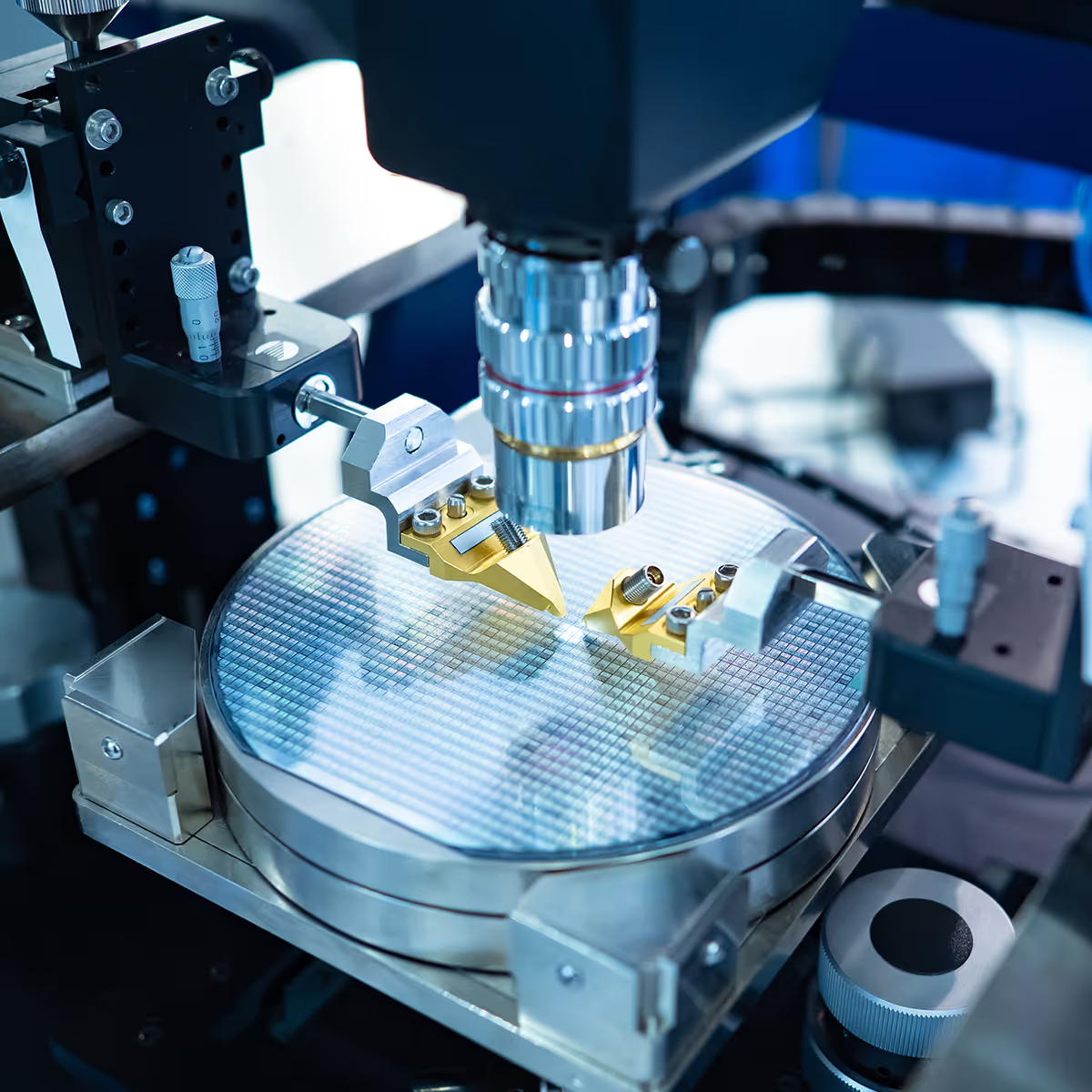
Semiconductor wafer fabrication equipment is under unprecedented pressure
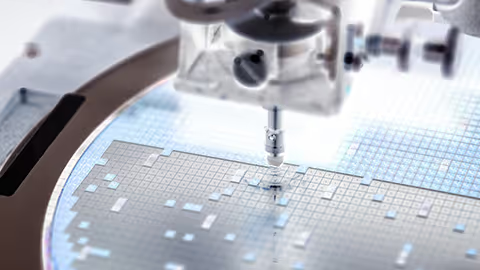
Semiconductor wafer fabrication equipment (WFE) continues to be pushed to deliver incremental gains in performance within already highly optimised systems. As device architectures become more complex, further improvements in precision, throughput and stability are no longer achieved through isolated enhancements, but require navigating tightly coupled, multi-physics interactions across the tool. Tolerances, energy densities, contamination control and process stability must all be managed simultaneously within increasingly narrow process windows, leaving less room for conventional optimisation approaches. As a result, even small performance gains now demand disproportionately greater innovation, combining deep analytical and technical capability with new ways of thinking, and often requiring external perspectives to challenge established design conventions and unlock system-level improvements.
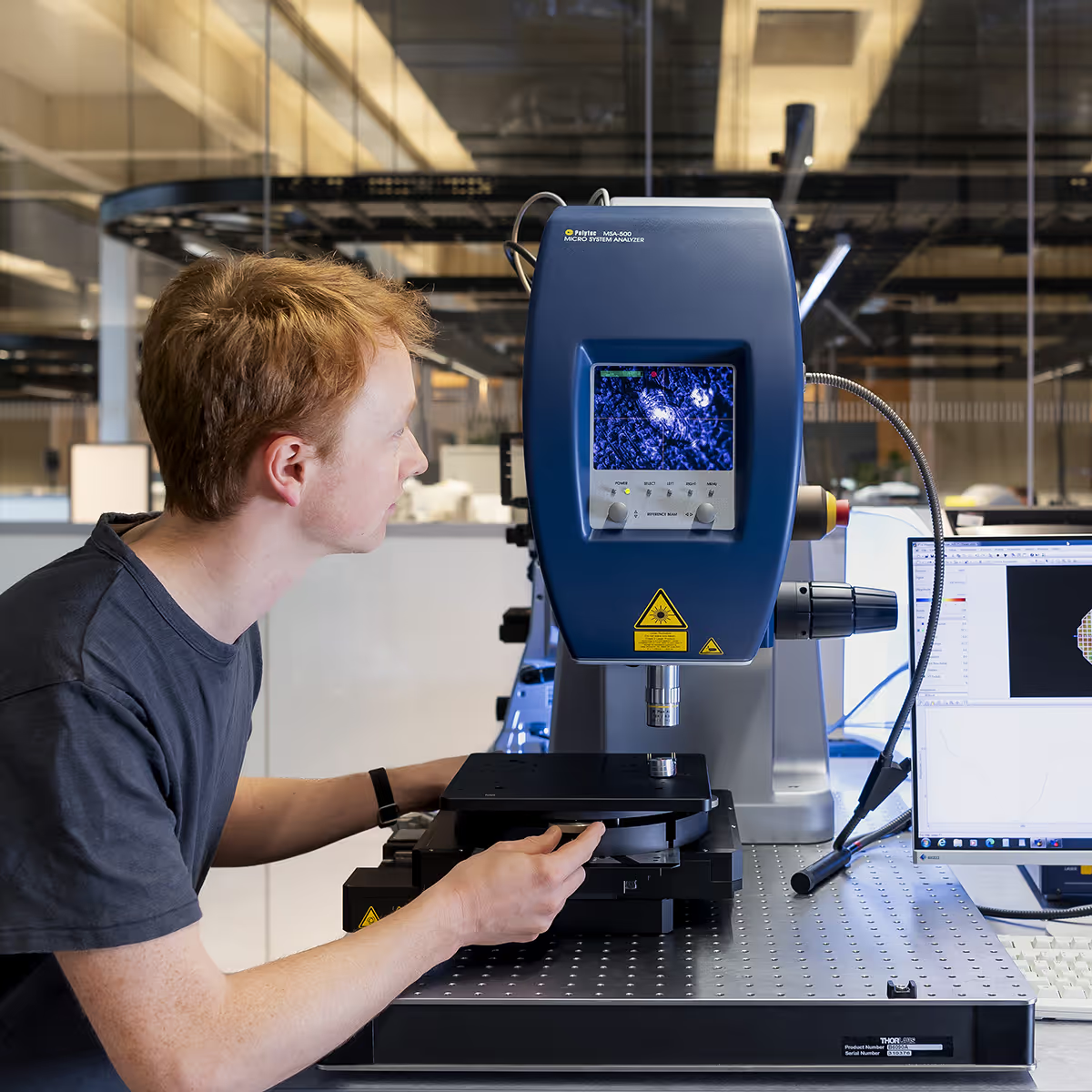
TTP partners with wafer fabrication equipment innovators to engineer step-change performance
We combine multi-physics modelling, advanced process engineering, development of new fluid delivery systems and inspection capabilities to solve tightly coupled system challenges. Our multidisciplinary teams integrate physics, hardware and manufacturability from early concept through to scalable implementation, helping equipment manufacturers unlock new performance regimes while maintaining robustness and commercial viability. To explore how these challenges are being addressed in practice, request our semiconductor white papers or contact our team for a technical discussion.
Request our white papers


Speak to one of our experts

Jonathan Halls

Jonathan is a physicist and experienced technical leader with a career background spanning clean energy, printed electronics, advanced materials and innovative deposition technologies. Before joining TTP Jonathan worked as a CTO, taking early-stage technologies from lab demonstration to commercial implementation. Jonathan obtained a PhD in Physics at Cambridge University, and enjoys working across multiple disciplines, building value at the interface between them.


David Pooley
David leads challenging interdisciplinary developments in TTP’s Energy and Materials team. He has a PhD in physics and is experienced in a range of multi-physics problems including sensors and actuators, microdevices, wireless power transfer, droplet generation and high temperature processes.

Oliver Smith

Jamie McPherson
Jamie has over 25 years partnering with TTP's clients tosuccessfully bring new products, systems and technologies to market. His experience covers an extensive range of sectors coveringindustrial products, consumer goods, personal care, food and beverage, powertools, laboratory equipment, aerospace, telecoms and material coating anddeposition. He has a background in mechanical engineering and is an alumni of the University of Edinburgh.
Meet some of the team
Jonathan Halls
David Pooley
Oliver Smith
Jamie McPherson
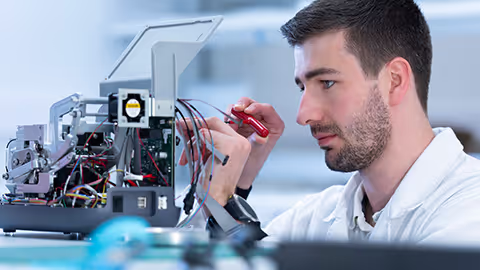





Software capability at TTP
Engages in all stages of software and product development, our software capability at TTP covers the full spectrum–from in-depth analysis and system architecture, to prototype design, implementation and development.

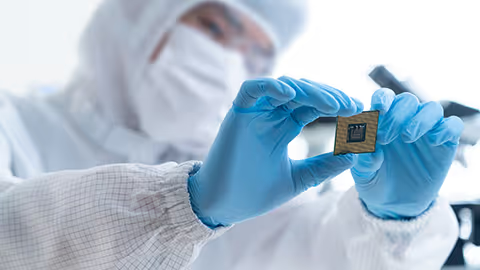
Manufacturing capability at TTP
Working seamlessly with our development teams, we take clients’ products through prototype builds, clinical trials, pilot manufacturing and more. Using TTP Manufacturing reduces uncertainty, risk and time to market for our clients.