The next decade of biotech innovation will be led by organisations that can produce novel molecules at an economically viable cost.
The biotech industry has crossed a critical threshold. Across AI-driven drug discovery, synthetic biology, diagnostics, and DNA data storage applications, product development success now depends on the capability to rapidly iterate through massive libraries of complex DNA, RNA, and proteins.
However, the capacity to create, test and optimise millions of molecular variants has become the limiting factor for many organisations trying to bring innovative products to market.
Molecular synthesis has evolved into a unique bottleneck for teams at the frontier of biotech R&D. The defining challenge is no longer designing the optimal sequence — it is producing it at the scale, speed, and cost required to turn theoretical potential into a commercially viable reality.
Conventional synthesis platforms were never engineered for this magnitude of throughput. When organisations attempt to scale traditional technologies from thousands to millions of variants, the linear increase in reagent consumption, infrastructure requirements, and operational overhead quickly becomes prohibitive. Overcoming this barrier requires a fundamental departure from legacy processes.
In this white paper, we explore why reaction miniaturisation has emerged as the definitive architecture for high-throughput, low-volume synthesis, and how leading organisations are transforming cost and scalability challenges into competitive advantages, powering the next wave of biotechnology innovation.
Enabling scale-out in biotechnology
Commercial success of a biotechnological process often requires reaction scale-up or scale-out. While scale-up reduces manufacturing costs for products such as antibodies or DNA, scale-out is required to synthesise sets of slightly different products, such as DNA strands, in parallel processes. In the past decade, innovation opportunities in reaction scale-out have emerged across the following areas:
- DNA/RNA oligo and peptide synthesis for drug discovery
- Microarrays for diagnostics and health screening
- DNA data storage
- Synthetic biology
- Enzyme engineering
- Capture/detection probes for targeted sequencing applications.
The common underlying principle of the above applications is the cyclic addition of building blocks (nucleotides, short nucleotide oligos, and amino acids) to a linear growing polymer (DNA/RNA or peptide strand, respectively). An example illustration: high-throughput screening applications require having 105-1012 of DNA/RNA oligonucleotide variant libraries, which are synthesised by repeating a building block addition–wash–deprotection cycle 10s-100s of times.
Scalability of currently available automated DNA oligo synthesis approaches is in the range of 103-105 oligos on column-based DNA oligo synthesisers [1] or robotic well plate liquid handlers [2], which is way below that of some particular current biomolecular synthesis market needs. Different segments of this market have distinct, compounding requirements. In personalised medicine, speed is as critical as scale: a custom capture probe library designed around an individual patient’s tumour must be available within days of diagnosis, because clinical monitoring windows do not accommodate synthesis timelines measured in months. For screening-intensive applications in drug discovery and directed evolution, the constraint is complexity at competitive cost, with libraries spanning 10⁵ to 10¹² variants requiring per-variant economics that column-based or well-plate approaches cannot approach. For write-once archival applications, commercial viability depends on driving cost per synthesised base to levels reachable only through radical miniaturisation. In each application, the ceiling is identical: synthesis economics sets the boundary of what is scientifically reachable and commercially viable within a given budget and timeline.
In a wider context, the DNA, RNA, and protein synthesis markets also face a directional pressure: design-make-test cycles are accelerating, driven in part by AI-assisted platforms that compress the time between hypothesis and experiment. Synthesis throughput is now a rate-limiting step in the innovation cycle. Consequently, each physical iteration takes longer and covers fewer variants than modern computational tools can generate. The resulting deficit in experimental data starves computational models of the feedback necessary for rapid refinement. Resolving this data starvation — particularly in markets such as high-throughput screening and DNA data storage — now depends on testing full, complex libraries using highly scalable automated platforms capable of pushing synthesis scales beyond 10⁵.
Reaching these scales demands a fundamentally new approach to molecular synthesis. Implementing these approaches requires complex, tightly integrated hardware, often custom-developed for a specific application to address the requirements and challenges that arise. As AI models continue to expand the size of the design space that can be explored, this gap between computational capability and physical build capacity is likely to widen, increasing the strategic importance of scalable molecular synthesis platforms.
Reaction scaling is non-trivial and balances throughput, reagent costs, space requirements, technology platform accessibility, set-up and platform development investment cost. From the reagent consumption standpoint, current well-plate and column-based DNA and peptide synthesisers operate in reaction volumes of 10s-100s of μL, which translates to hundreds of litres — thousands of cubic meters of costly reagents, which would be required to synthesise DNA/peptides variant libraries to meet the needs of high-throughput screening/DNA data storage markets. In the current synthesis format, 10s-100s of μL of liquid are contained in individual DNA synthesiser columns or SBS1-sized multi-well plates, which occupy more space as the number of column/plate units increases, making the process extremely difficult to scale. The aforementioned constraints and high market demand for scalable DNA/RNA/peptide synthesis solutions call for alternative liquid-handling approaches. Ultimately, organisations without synthesis platforms that match the required scale, speed, and cost do not simply operate less efficiently. They operate within a narrower set of scientific and commercial strategies. That gap becomes harder to close as competitors who have solved the synthesis problem iterate faster, achieve greater diversity in sequence variants, and test across a broader range of what can be economically tested.
Liquid handling at ultralow volumes
Some attractive approaches to scale-out in biomolecular synthesis involve site-selective reagent activation with light, bead-based synthesis or synthesis in miniaturised emulsion droplets. These paths are scientifically elegant and, for certain applications, may eventually prove transformative. But each depends on deep innovation in chemistry, materials, optics and synthesis platform and are not yet mature enough to support commercial throughput at the cost points the market requires.
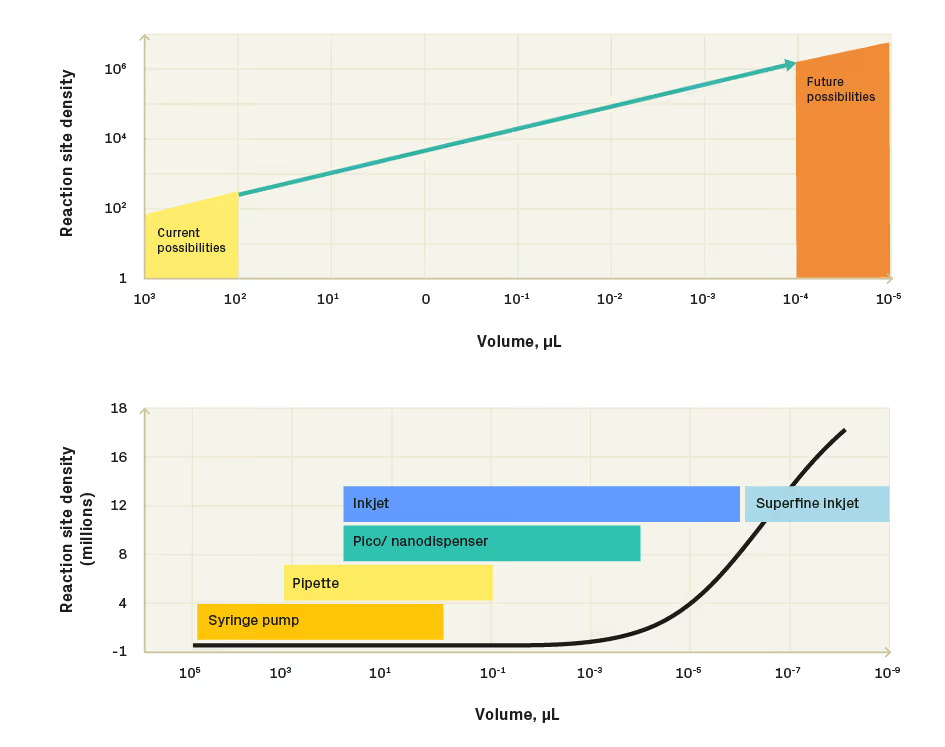
In contrast, a more straightforward route to managing space requirements and increasing reagent cost when scaling is to reduce reaction volume. For example, a 1,000,000-fold reaction volume reduction from 100 μL to 100 pL allows for an increase in reaction site density by 6000-fold (Figure 1 left). However, existing conventional liquid handling tools – syringe pumps, pipettes and pico-, nano dispensers - are no longer capable of transferring liquids in volumes lower than mid-pL range, way below the regime where significant scalability can be achieved (Figure 1 right). Accessing the regime with minimised reaction volumes and maximised reaction site density requires the implementation of orthogonal liquid dispensing approaches. Inkjet printing technology, which has been widely used in home/office printing and the graphics industry, has recently emerged as an attractive method for dispensing biological materials 2(cells, enzymes, nucleic acids, biological reaction buffers). Inkjet printers use rapid heating (thermal inkjet) or piezo actuators (piezo inkjet) to push tiny, low pL volume liquid drops through the nozzle in a highly controlled manner and deposit them on a substrate with precision as high as 21 μm. Due to the continuous nature of liquid dispensing, inkjet-dispensed volumes can be easily scaled up to hundreds of μL, enabling a very broad range of volumes that a single printing head can dispense, making inkjet a good choice for applications requiring a broad volume range and precise volume control. If an application requires sub-pL volume dispensing, superfine inkjet technology comes to mind. Superfine inkjet print heads can dispense inks down to fL volumes, pushing the boundary of what is possible even lower [3]. While inkjet offers a compelling route to low-volume dispensing, its successful application to biological systems depends strongly on managing fluid properties, nozzle reliability, and reagent stability during dispensing. Unlike industrial printing applications, biological reagents impose formulation constraints, shear-sensitivity requirements, and temperature tolerances that demand deliberate co-design of reagent and hardware.
Ultralow volume reaction format
In conventional applications, high-throughput screening and biomolecular synthesis are carried out in tubes, well plates, or microfluidic droplets. Automation solutions for handling tube racks and well plates include liquid handling robots. Some are very versatile, such as RAC modules from Ginkgo, Hamilton Star, Opentrons, Beckman, and Analytik Jena, and can be easily customised for specific assays or processes. Others are highly specialised for specific applications with minimised user hands-on time. Well-plate liquid-handling robots benefit from standardisation and versatility – they are compatible with standard labware and programmable directly by the end user. Another benefit of liquid handlers comes from liquid handler operational similarity to a manual benchtop process – both cases operate in a similar volume range, use a pipette to transfer liquids, and often the same type of reaction containers (multiwell plates, tubes), which makes the assay protocol transfer from benchtop to a robot much more straightforward. However, well-plate/tube liquid handlers do not scale – they quickly reach a limit on how many plates a single robot can handle at a time. Further scaling requires using multiple robots, which in turn limits how many instruments fit into a room, facility, or building (Figure 2).
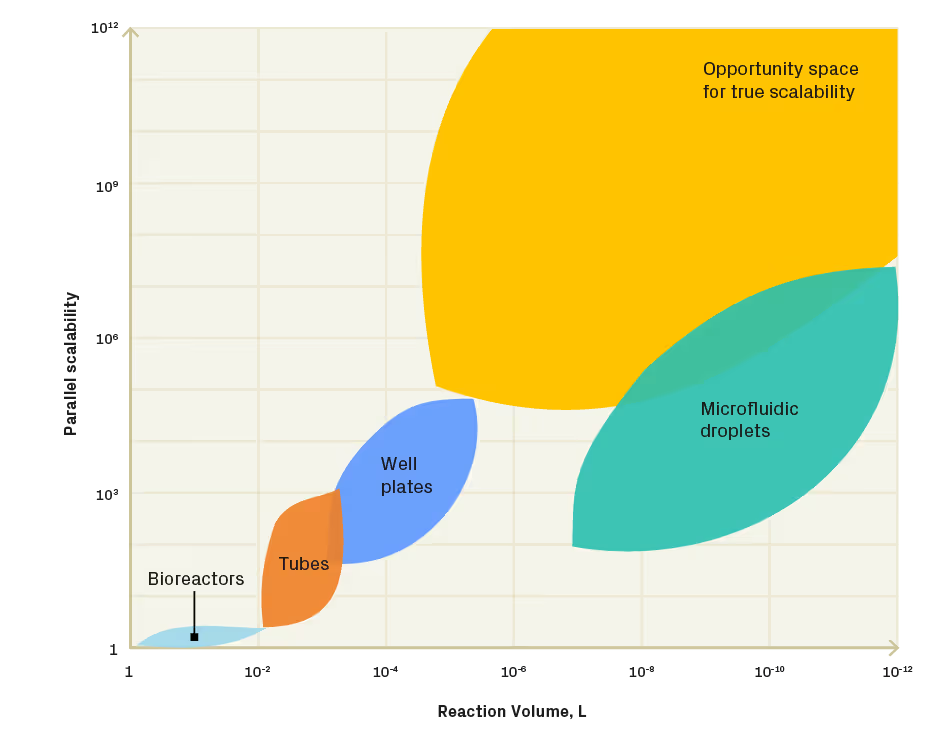
Inherent space constraints associated with well plates and conventional liquid handlers drive the need for alternative reaction formats. Alternative low-volume reaction formats include water emulsions in oil, generated using microfluidic droplet generation technologies. Flow-focusing and T-junction microfluidic devices can produce millions of pL-nL-volume drops per day. Each drop is a unique reaction vessel with enzymes, nucleic acids, reaction buffers or whole cells. Microfluidic drops can be manipulated by moving them in bulk fluid using conventional syringe pumps or individually on electrowetting chips, enabling operations such as sorting, merging, splitting, mixing, and incubation [4]. Drop compatibility with conventional light detection techniques, such as absorbance or fluorescence, makes this reaction format very attractive for high-throughput screening applications. Microfluidic drops are compact and can be stored and manipulated in small containers – an emulsion of a few millions of pl drops fits into a single 1.5 mL Eppendorf tube, making this reaction format easily scalable for parallel processes (Figure 2). Microfluidic drops are well-suited for applications requiring high-throughput processing and scalability. However, because water-in-oil drop emulsions are moved by bulk fluid flow, it becomes extremely challenging to re-address individual drops. This limitation may be critical in applications that require addressing each reaction site multiple times, such as DNA oligo synthesis.
Perhaps the simplest reaction format that overcomes some limitations of microfluidic drops is small reaction drops on a flat substrate. When combined with precise ultralow volume liquid dispensing technologies, such as inkjet, flat substrates offer a range of advantages:
- Simple to manufacture and handle
- Compatible with ultralow volume dispensing technologies
- In situ optical reaction QC is possible due to substrate transparency
- Reaction sites are physically separated – each site can be addressed multiple times
- Each site can be easily molecularly barcoded for downstream applications
- High reaction site density – millions of reaction sites can be packed in a small area
- Ultimate scalability – flat substrates can take up a variety of shapes and forms, from small microscopy glass slides to large glass, plastic sheets or flexible tape rolls, offering different scalable substrate packing options
- Wider range of opportunities for substrate washing between reaction cycles – unlike well plates, flat substrates do not rely on pipettes for reaction site washing. Bath, continuous liquid flow, or other novel low-fluid-consumption washing approaches could be used for this purpose
Low volume reaction challenges
For a miniaturised synthesis process to be commercially viable, it must remain controllable, reproducible, and deliver a sufficiently low error rate to yield a usable product. The economic case for miniaturisation rests entirely on yield: a process that reduces reagent consumption but introduces systematic error propagation across synthesis cycles does not improve cost per usable product. It undermines it. The challenge is that reaction volume reduction inevitably means the following changes:
- Higher evaporation rates
- Shift in reaction kinetics
- Increased reagent exposure to surfaces
- Reduced amounts of the synthesis products
- Alternative reagent deposition technology to pipetting (e.g. inkjet)
- Alternative reaction container/substrate
- Non-conventional reaction product recovery
Each of these effects can compromise a synthesis process that performs reliably at bench scale. The sections below examine the mechanisms behind them and the approaches that can address each.
Managing evaporation
In practice, evaporation is the first, and often the most challenging, limiting factor that teams encounter when transitioning to low-volume reactions. The smaller the droplets, the faster they lose the solvent (water), leaving less time for reactions to occur. For 200 pL and smaller drops, this time allowance is 5 s, after which no free water remains (Figure 3). Generally, the longer the reaction time, the more product will be synthesised until the reagents are depleted and equilibrium is reached. Hence, retaining water in the reaction environment for as long as possible is critical to increasing reaction product yields.

Multiple approaches can be used to extend the lifetime of aqueous drops. These include using humectants, controlling temperature and humidity, and using physical barriers that prevent water from escaping. Generally, liquids in cold, high-humidity environments lose water content more slowly. In our experience, placing physical barriers around the reaction site can create a local microenvironment with controlled temperature and humidity to preserve reaction droplet integrity. The addition of humectants, such as glycerol or polyethylene glycols (PEGs), to the reaction mixture is another way to extend drop lifetime and may be used in combination with hardware controls. In essence, for organisations, managing evaporation at ultralow volumes requires treating humidity, temperature, and formulation as interdependent variables rather than independent controls.
Mitigating reagent exposure to interfaces
High liquid exposure to air and other interfaces may also reduce reagent lifetime. For example, mild reducing agents present in certain enzymatic reaction buffers are oxidised when exposed to atmospheric oxygen, thereby failing to maintain enzymes in an active, disulfide-reduced state. Increased air exposure may also make enzymes and other protein-based reaction components prone to misfolding and aggregation, reducing reaction yields. In certain reaction formats, such as microfluidic droplet emulsions in oil, the air-water interface is replaced by an oil-water interface, which can alter reaction rates.
Several approaches can mitigate these effects. Purging the reaction environment with an inert gas such as nitrogen or argon creates an oxygen-depleted atmosphere that substantially limits oxidation of sensitive buffer components. To address non-specific adsorption of proteins and nucleic acids to reaction vessel surfaces, antifouling coatings or hydrophilic surface treatments can be applied to minimise reagent losses and preserve effective concentrations in solution.
Optimising reaction rate and yield
Another uncertainty in low-volume reactions is unknown reaction rates. Molecule reactivity at interfaces (air-water, oil-water, reaction substrate-water) can differ markedly from that in bulk fluid. At low reaction volumes, the surface-to-volume ratio is high, meaning a greater fraction of reacting molecules is in a higher-energy state, which may affect reaction rates. Hence, understanding the kinetics of assay chemistry is key to a successful reaction volume scale-down. In early reaction scale-down R&D, treating reaction time as a parameter for later optimisation rather than fixing it at bench-scale values allows feasibility work to proceed without the compounding uncertainty of under-timed reactions.
Low reaction volumes generally produce fewer product molecules. Even small losses at each cycle can significantly reduce the yield of full-length products containing all required building blocks in the correct sequence. As a result, strategies that enhance coupling efficiency under low-volume conditions are particularly important. One approach is to use molecular crowding agents, such as PEGs, which can increase effective reactant concentrations and accelerate reaction rates. However, in practice, molecular crowders introduce a trade-off through increased viscosity, which can slow molecular transport and complicate reagent dispensing. To address these challenges, enzyme engineering approaches are often used to generate improved synthesis enzyme variants that maintain high activity in viscous environments and remain resilient to interfacial exposure and the shear stresses associated with inkjet-based liquid dispensing. Zwitterionic polymers, such as polysulfobetaines, offer an alternative by creating a hydrated microenvironment around enzymes that helps preserve their native structure and maintain catalytic activity. Finally, surfactants, which are used to stabilise water-in-oil emulsions and adjust droplet surface tension, also help improve enzyme solubility and stability, and hence catalytic activity.
Yet another difference between large-volume and low-volume reactions is the type(s) of molecular transport that dominate. In large volumes, the reaction mixture may be mechanically agitated to enhance turbulent mixing, accelerate molecular collisions and increase the reaction rates. At μL and lower volumes, mechanical agitation becomes virtually impossible and molecular transport occurs solely via diffusion. This means that the reaction rates are more likely to be diffusion-limited and hence slower than on a bench top, with particular consequences where reactions must reach full substrate conversion. Continuous reagent flow, as in solid-phase formats, can partially mitigate this by maintaining high reagent concentration at the reaction site.
Transferring the synthesis process to low volumes becomes less straightforward for certain liquid-manipulation techniques, such as magnetic bead/spin column resin-type purification. Adaptation of these methods for use in sub-microliter-volume reactions is not straightforward. A way around this is to run reactions on solid supports – functionalized glass or plastic. Attachment of synthesised strands allows effective washing, rapid and efficient reagent exchange between the synthesis steps and eliminates the need for intermediate reaction product purification between synthesis reaction steps.
Integrating hardware
In practice, low-volume reaction automation requires fundamentally different approaches to both liquid handling and reaction formats, introducing a range of integration challenges not encountered in conventional systems. The primary risk is the stability of biological reagents during dispensing. For example, in thermal inkjetting, the ink is rapidly heated locally to around 320 °C, forming a vapour bubble that then ejects an ink drop from the nozzle. Heat shock poses a risk of permanent damage to enzymes and other temperature-sensitive reaction components. If this becomes an issue, alternatives for low-volume liquid dispensing include piezoelectric and mechanical inkjet methods, which avoid the thermal shock and high shear stress associated with thermal bubble formation. Ultimately, the successful dispensing of biological reagents requires rigorous inkjet parameter optimisation, supported by advanced imaging tools that map droplet dynamics in precise detail and confirm optimal printer operation (Figure 4).

Second, a controlled-temperature environment with increased relative humidity may be critical for reducing evaporation and extending the reaction drop lifetime. However, in high-humidity environments, ambient temperature is very close to the dew point, increasing the risk of water vapour condensation. In successful applications, avoiding condensation requires tight control of both surface temperature and local humidity, particularly as systems approach the dew point. This is critical to ensure reaction sites remain isolated throughout the synthesis process.
Increasing reaction site density on spatially isolated, surface-affixed reaction sites (i.e., reagent mixture drops on a flat surface) necessitates very high liquid dispensing accuracy. This could be achieved by using high-accuracy printhead and reaction-substrate motion stages and by isolating the liquid-dispensing system and the substrate from vibration sources.
In essence, industrialising high-throughput biomolecular synthesis requires hardware integration that transcends traditional laboratory automation. As library sizes expand into the millions, microscopic hardware performance deviations compound into massive operational deficits. Therefore, economic viability dictates uncompromising systemic reliability — a state in which mechanical precision and reaction vessel stability are so closely synchronised that they guarantee consistent, high-fidelity yields across millions of consecutive reaction cycles.
Reaction product recovery
Ultimately, low-volume synthesis product recovery, downstream processing, and QC may require alternative approaches, largely due to the very low amounts of reaction products generated and the format in which these products are present (e.g., attached to the reaction surface, spread out on a large area of a solid support, or on rolled tape). In practice, the most sensitive analytical methods, such as DNA sequencing or mass spectrometry, are readily available for low-volume post-synthesis reaction QC. However, these methods are generally used offline, away from the instrument, and require recovery of the reaction product from the substrate.
Reaction product recovery heavily depends on the reaction format. Product synthesised in emulsion droplets is often in a μL-mL total liquid volume, which can be moved around as bulk fluid and processed manually with a pipette or an off-the-shelf liquid handler. Recovery of surface-attached product may require innovative approaches with custom flow cells and/or custom hardware designed for the purpose. The engineering overhead of product recovery and downstream processing is not separable from the platform’s commercial case. At the synthesis scales that justify the investment in miniaturisation, recovery approaches that introduce yield losses or processing bottlenecks erode the cost advantages that the volume reduction was designed to achieve.
From miniaturisation to commercial viability
Successful miniaturistion of molecular synthesis is not simply a technical exercise. Every engineering decision ultimately influences cost, throughput, yield, and scalability. The framework below illustrates how solving the core challenges of low-volume synthesis translates into commercial advantage.
Accelerating next-generation biomanufacturing
The next decade of biotechnology will not be constrained by our ability to design molecules. It will be constrained by our ability to economically create them.
As AI-driven discovery platforms, advanced sequencing technologies, and computational design tools continue to expand the number of candidate molecules that can be generated, the competitive advantage will increasingly belong to organisations capable of physically creating, testing, and iterating those designs at scale. Molecular synthesis is becoming the critical bridge between computational innovation and commercial reality.
Commercially viable low-volume synthesis is achieved not through miniaturisation alone, but through the co-design of chemistry, hardware, reaction format, and downstream processing. By reducing reaction volumes from microlitres to picolitres or below, organisations can dramatically lower reagent consumption and increase reaction site density, enabling the synthesis of millions of variants at economically sustainable costs.
However, success depends on overcoming the coupled challenges of evaporation, interfacial effects, altered reaction kinetics, precise liquid handling, and product recovery. Companies that integrate ultralow-volume dispensing, robust environmental control, optimised reaction chemistries, and scalable substrate architectures can fundamentally change the cost-throughput equation.
Those that solve the synthesis bottleneck will gain a decisive advantage in cost, speed, and scale, enabling entirely new classes of products, applications, and business models across drug discovery, diagnostics, synthetic biology, enzyme engineering, and DNA data storage.
Access the full whitepaper here.
References
[1] [Online]. Available: https://www.biolytic.com/t-dna-rna-oligo-synthesizer-768xlc.aspx.
[2] [Online]. Available: https://www.hamiltoncompany.com/microlab-star.
[3] “Superfine inkjet technology,” SIJ, [Online]. Available: https://sijtechnology.com/en/technology/.
[4] T. a. Q. S. Squires, “Microfluidics: Fluid Physics at the Nanoliter Scale,” Reviews of Modern Physics, vol. 77, p. 977, 2005.
About TTP’s Molecular Synthesis & Omics Team
Your challenge is often not the science, but making it work at scale and remain commercially viable. Our team helps you overcome these barriers by turning complex molecular processes into robust, scalable systems. We combine expertise in molecular biology, sequencing technologies, optics, electronics, and mechanical engineering — bringing together the disciplines needed to solve problems at the interface of biology and hardware. Whether enabling higher-throughput synthesis, reducing reaction volumes, or integrating intricate workflows into reliable platforms, we help you move from promising concepts to practical, deployable solutions. The result is faster development, reduced technical risk, and the ability to unlock capabilities that would otherwise remain out of reach.