Advancing retinal delivery for next-generation therapies
Turning complex retinal science into precise, repeatable and commercially scalable delivery systems
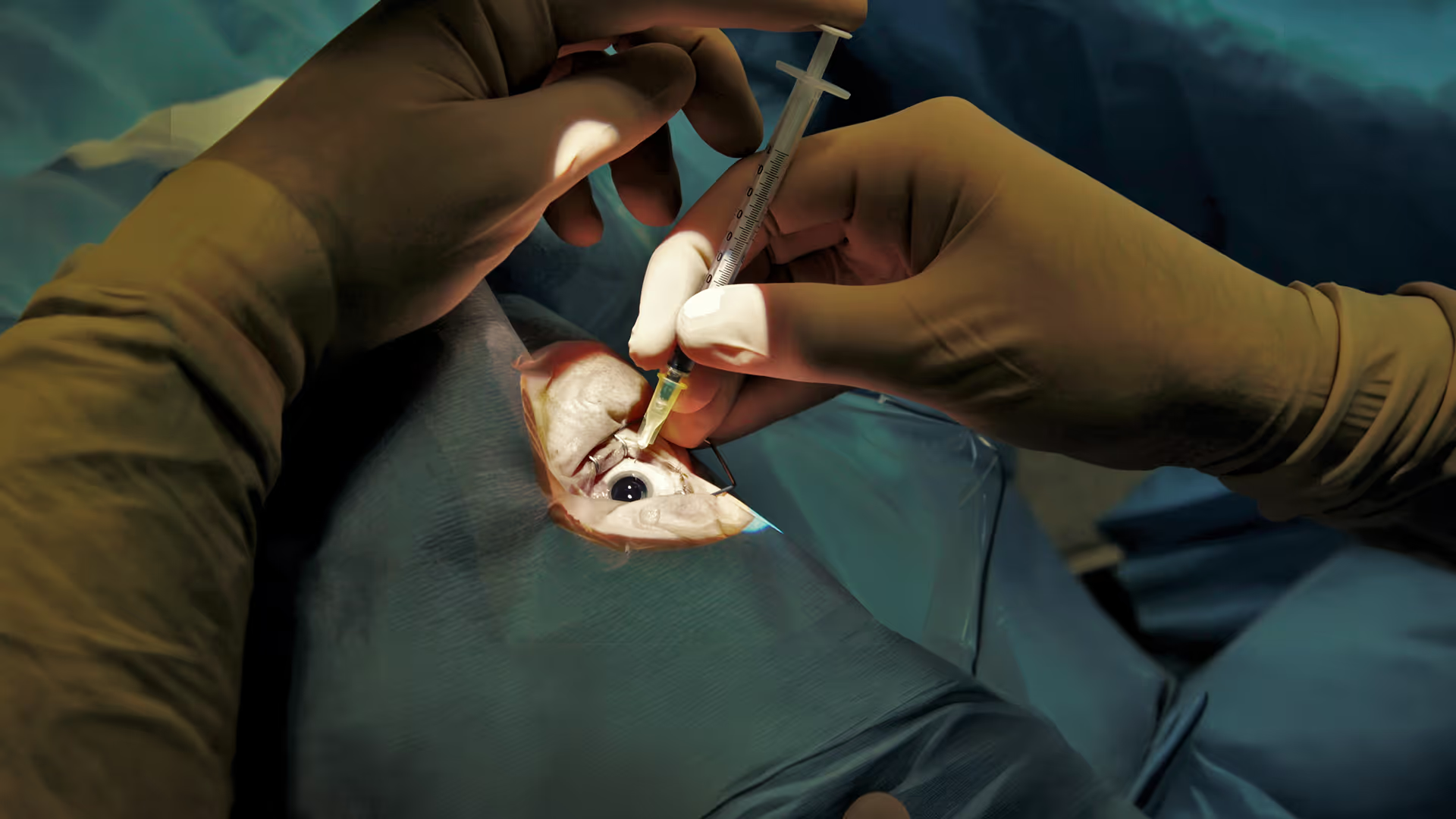
Cell and gene therapies are reshaping ophthalmology, but many existing delivery techniques are not designed to meet the scale, precision and clinical demands these therapies require.
TTP helps therapy and device teams develop delivery systems that reduce procedural variability, minimise dose waste and support more repeatable, scalable treatment delivery.
Explore the key delivery challenges, emerging approaches and design considerations shaping the next generation of retinal therapies.

Why retinal delivery is becoming a bottleneck
As ophthalmic pipelines shift toward biologics, cell and gene therapies targeting the back of the eye, existing retinal delivery approaches are being pushed to their limits. Larger molecules, procedural complexity, and scalability challenges are exposing the limitations of current techniques.
For developers of retinal therapies, the challenge is not only reaching the right tissue, but doing so reliably and at scale. Current surgical approaches depend on limited specialist capacity, while variability between surgeons and sites can lead to inconsistent delivery, complicating clinical trial data and making it harder to distinguish therapeutic effect from procedural technique.
These challenges are compounded when delivery systems waste valuable API through priming, dead volume or inefficient delivery. For therapies that are costly, complex to manufacture, or only available in small volumes, future retinal delivery systems will need to simplify procedures, improve repeatability and make more efficient use of each precious dose.
Report: Why today's retinal delivery tools won't scale
The move toward high-volume retinal therapies will require more than incremental improvements to existing delivery methods. Our report explores why current approaches are unlikely to meet future demand and what this means for next-generation device development.
Guide: Anatomy, drugs and delivery approaches
Route selection depends on more than target anatomy. Drug class, molecular size, formulation behaviour and target location all influence which ocular delivery approaches are likely to be practical, effective and scalable.
Our visual map helps teams assess the opportunities and limitations of different front- and back-of-eye delivery routes.
Scaling subretinal delivery beyond specialist surgery
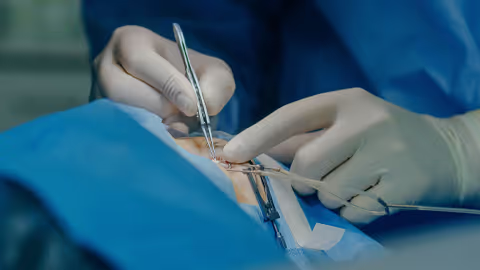
Subretinal delivery enables direct access to retinal tissue, but introduces significant procedural, device, and scalability challenges that require new delivery approaches. Today’s procedures remain highly skilled, time-intensive, and inherently risky, restricting broader patient access. Without a significant step change in procedural simplicity, speed, and cost, subretinal delivery is unlikely to become mainstream.
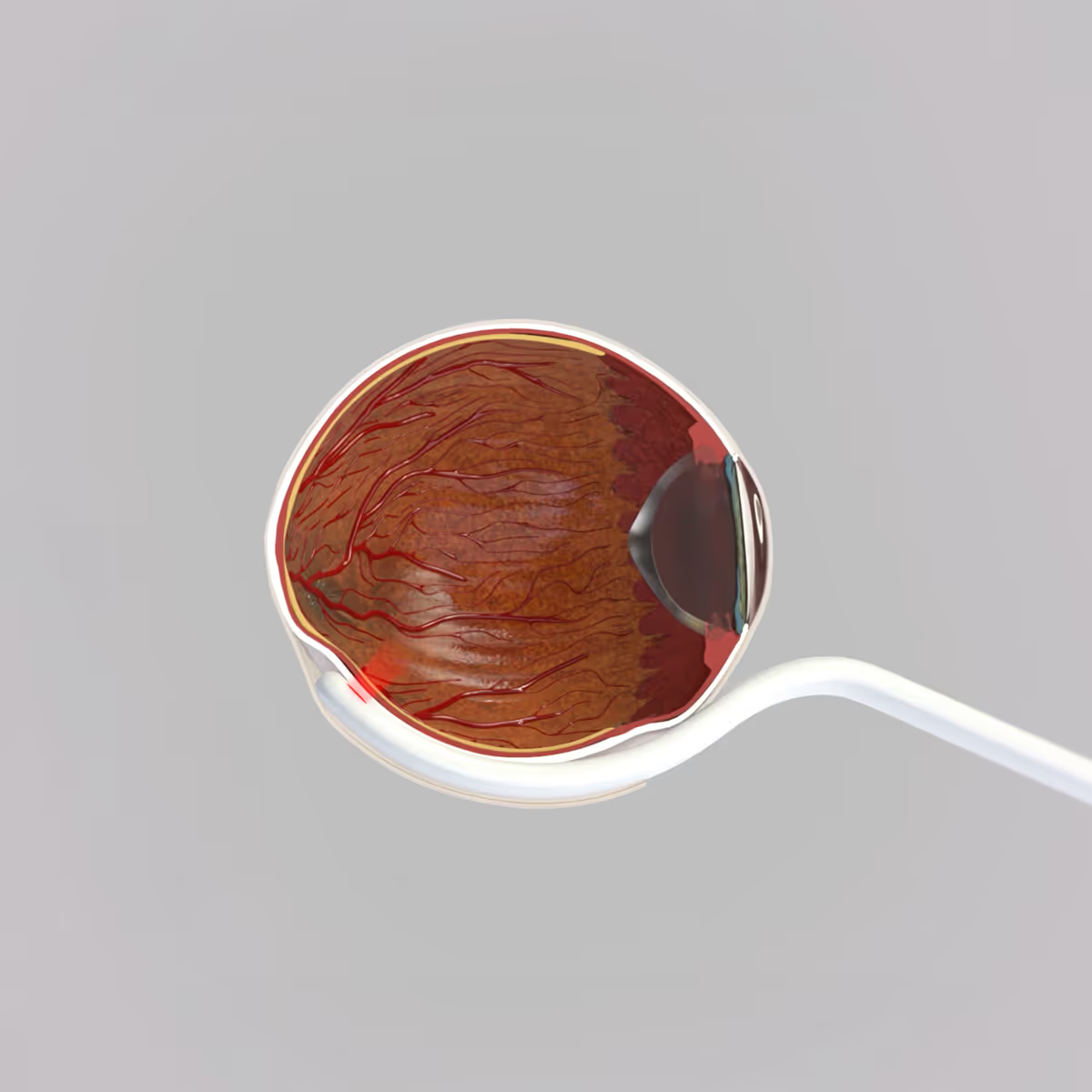
Sub-Tenon injections are relatively common office procedures. However, existing sub-Tenon injections remain outside the globe, are untargeted, and intended to deliver anaesthesia. A device that uses the sub-Tenon route to access the back of the eye allows precise positioning on the globe relative to the macula, and provides fine control of needle penetration depth could enable in-office subretinal injection at scale.
Sub-Tenon’s delivery provides an opportunity to take retinal drug delivery from surgery to the office, using a common access route for anaesthesia. At TTP we’re exploring a novel sub-Tenon approach designed to enable controlled, targeted access to the subretinal space - with the potential to shift retinal delivery from the operating theatre to the office.
Get in touch to explore the concept and its implications for scalable retinal therapies

Advancing suprachoroidal delivery for targeted retinal therapies
Suprachoroidal (SCS) delivery offers an alternative route for targeting therapies to the choroid and retina while limiting systemic exposure. However, it also introduces therapy-specific challenges and procedural risks.
Low-viscosity formulations can spread across the globe following injection into the anterior choroid, enabling broad retinal coverage with relatively simple delivery tools. High-viscosity formulations, by contrast, tend to remain localised at the injection site, requiring more sophisticated approaches to ensure accurate delivery where needed.
Experimental cannula-based SCS delivery systems positioned near the macula may help deliver high-viscosity formulations to the central retina, though they offer little advantage for low-viscosity therapies. Despite growing interest in this route of administration, there are currently no marketed purpose-designed tools for posterior SCS access.
Designing intravitreal devices for reliability and usability
Intravitreal delivery has become the standard for many posterior segment therapies, offering efficient access to the back of the eye while driving demand for improved usability, dosing frequency, and patient experience. As demand grows for longer-lasting therapies and improved patient experience, device performance becomes critical to success.
Our Ocular Drug Delivery team explores four often-overlooked engineering challenges that can significantly impact reliability, manufacturability, and usability. Drawing on experience across multiple IVT inserter programmes, it highlights the trade-offs that shape effective device design.
Insight: Four key design challenges for successful IVT devices
Improving topical delivery beyond the traditional eye drop
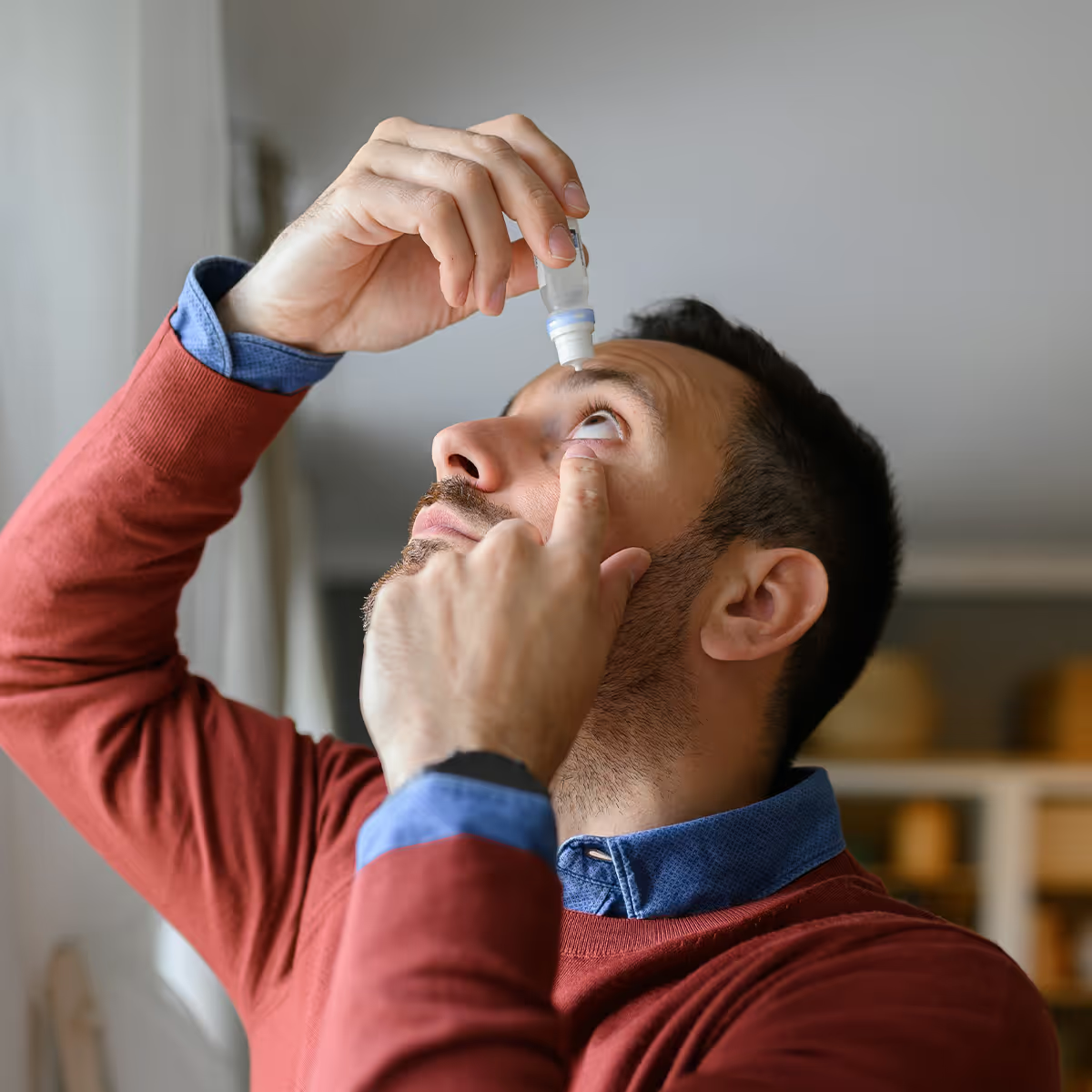
Topical delivery remains the mainstay of ocular drug administration. It is a mature, relatively simple approach that continues to work well for many therapies - despite its apparent inefficiencies. Flooding a ~10 microlitre tear film, which refreshes within minutes, with a 40 microlitre eye drop may seem crude, yet it can still achieve effective therapeutic outcomes for a wide range of drugs.
At the same time, it is unsurprising that topical delivery can suffer from poor bioavailability and systemic side effects. Much of the administered dose is cleared from the eye within seconds, and almost all of it within minutes. Both perspectives are valid. Ultimately, successful topical delivery depends on matching drug pharmacokinetics and transport behaviour to the capabilities - and limitations - of the delivery route.
More advanced topical delivery technologies could help expand the range of compatible therapies. Improvements such as tighter dose control, horizontal delivery approaches, multi-dose preservative-free systems, and other innovations may help improve retention, reduce waste, and enable more effective ocular drug delivery.
Developing next-generation retinal delivery systems
From route selection and device architecture through to usability, manufacturability, and procedural optimisation, our team helps developers navigate the challenges of retinal drug delivery.
Meet us at



.avif)

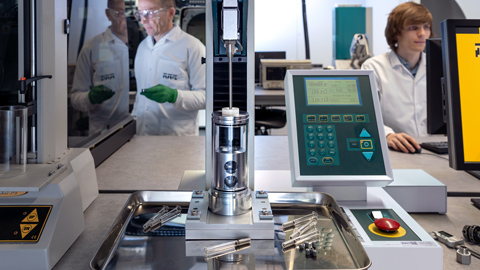



When we received the new moulded parts incorporating TTP’s recommendations, all of them performed as intended and within specification. We were really excited.
Justin Creel
Vice President of Device Development

We approached TTP to help us de-risk several of our delivery device concepts. The analysis and concepts generated were well thought out and detailed, allowing us to make risk-based decisions to guide the projects. In one instance, their analysis steered us away from a concept that would have been quite costly to prove reliability. TTP’s expert approach to problem solving is evident as the team was able to meet all deliverables within the agreed budget and timeline. The service we received exceeded expectations and we plan to work with TTP on future projects.
Ian Parrag
Vice President of R&D at Ripple Therapeutics
Our areas of focus:
Medical Devices & Drug Delivery
Our approach and capabilities
We deliver across the entire life of a project, from opportunity discovery to production engineering. Discover how our interdisciplinary teams of experts collaborate to tackle the toughest product development challenges.

Our campus and facilities
Our award-winning campus has been designed with a clear vision. To create space which can suport our people and our clients as we develop and deliver the very best technology solution.

Software capability at TTP
Engaged in all stages of software and product development, our software capability at TTP covers the full spectrum—from in-depth analysis and system architecture to prototype design, implementation, and test development.

Manufacturing capability at TTP
Working seamlessly with our development teams, we take clients' products through prototype builds, clinical trials, pilot manufacture and more. Using TTP Manufacturing reduces uncertainty, risk and time to market for our clients.

Meet some of the team

Nathan Wilkinson

Matthew Parker

Rob Selby
Talk to us about your next project
We help clients with all stages of their most complex and challenging technology and product development projects.
If you're considering the next steps along your innovation journey, why not get in touch?