The next decade of biotech will not be limited by our ability to design molecules. It will be limited by our ability to produce them economically.
AI-driven drug discovery, synthetic biology, diagnostics, enzyme engineering and DNA data storage are accelerating demand for larger, more complex DNA, RNA and protein libraries. Yet for many organisations, molecular synthesis is becoming the limiting factor.
The challenge is no longer designing more molecules. It is producing them at the scale, speed and cost required to make innovation commercially viable.
As organisations move from thousands to millions of variants, reagent consumption, infrastructure requirements and operational costs can quickly become prohibitive. Conventional synthesis platforms were never designed for this level of throughput.
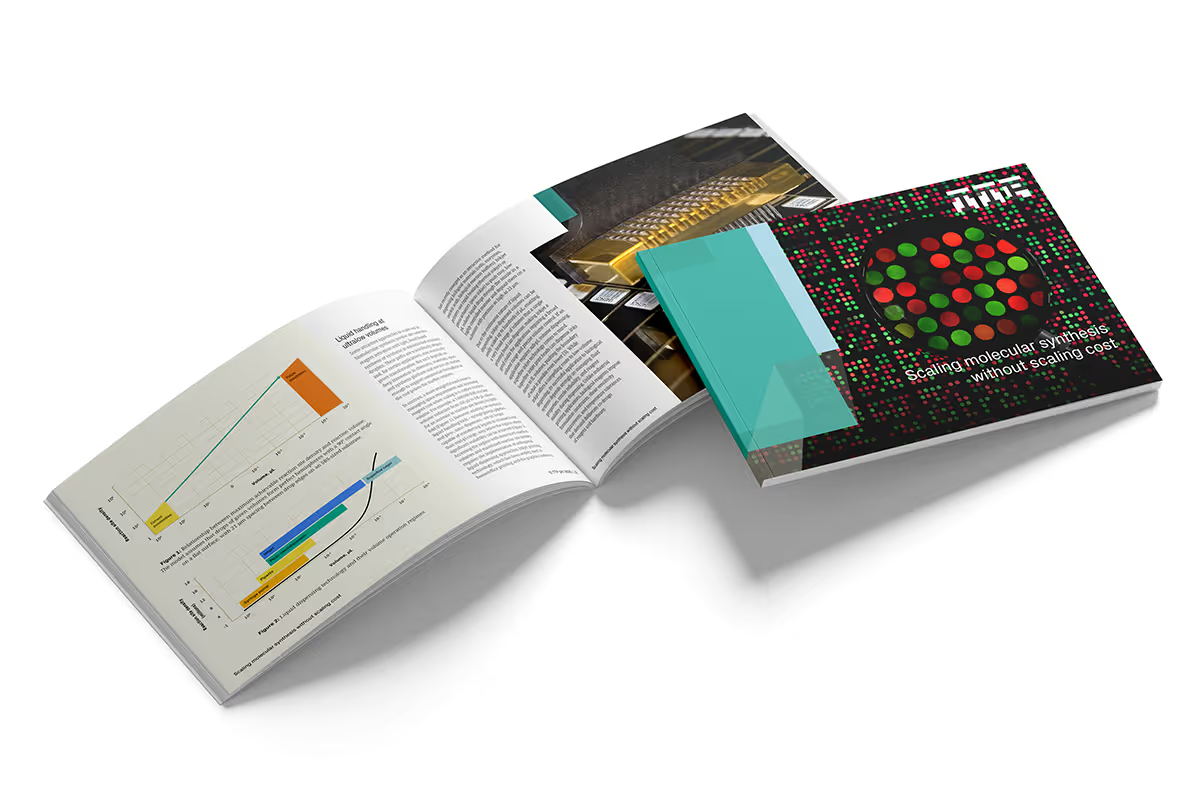
This guide explores why reaction miniaturisation is emerging as a critical enabler of scalable molecular synthesis, and what it takes to build commercially viable low-volume synthesis systems.
Download the guide to learn:
- Why molecular synthesis is becoming the next major bottleneck in biotech innovation
- The economic realities of scaling from thousands to millions of molecular variants
- How reaction miniaturisation can dramatically improve throughput while reducing reagent consumption
- The technical barriers that emerge at picolitre and nanolitre scales – and how to overcome them
- The trade-offs between different low-volume reaction formats and liquid-handling approaches
- Key considerations for building robust, scalable synthesis platforms
- How to evaluate the commercial viability of a low-volume synthesis strategy before significant investment
Download your copy to discover how leading organisations are overcoming the cost and scalability barriers that threaten to slow the next wave of biotechnology innovation.
Download the white paper