1. Lifecycle discipline
At TTP, regulated software development is treated as a lifecycle engineering discipline rather than as documentation added around implementation. Safety, Cybersecurity, architecture, verification, and risk management are integrated into the development from the outset, so that assurance is generated continuously as the system evolves.
This reflects the reality that regulators increasingly evaluate not only software functionality, but the maturity and defensibility of the lifecycle behind it.
Software development at TTP is delivered through an IEC 62304-aligned lifecycle embedded within an ISO 13485 quality management framework. Requirements, architecture, verification evidence, and risk controls are managed as connected engineering activities rather than isolated compliance artefacts.
Project-specific development planning defines lifecycle activities, responsibilities, tools, and rigour expectations early, allowing verification strategy, traceability, and architectural control to scale appropriately with software safety classification, intended use, and clinical risk.
2. Proportionate rigour for developing medical device software
A central feature of TTP's approach is proportionate rigour. Different systems require different depths of lifecycle control, so the level of formality must be scaled to remain efficient and sustainable.
Higher-risk systems may require deeper architectural definition, stronger verification independence, and more formal lifecycle evidence, while lower-risk systems can use lighter controls where justified, without compromising confidence in safety or quality. Proportionate rigour keeps process focused on real risk
This proportionality matters because process is only useful when it improves understanding and control. If every project is treated as equally critical, it can obscure what matters, create unnecessary burden and cost, and make important architectural decisions, verification rationale and risk controls harder to see.
Too little rigour in higher-risk areas creates the opposite problem, leaving gaps where stronger lifecycle control is needed to support safety, regulatory confidence and product quality.
Applying rigour deliberately means matching the level of lifecycle control to the risk, intended use and stage of development. Higher-risk software may need more detailed architecture, greater independence in verification, stronger traceability and more formal review of design decisions. Lower-risk or earlier-stage software can move with less process, provided the controls remain appropriate to the decisions being made and the potential impact of failure.
Applied well, proportionate rigour makes lifecycle discipline sustainable across different projects, product stages and software releases. It keeps important decisions clear while concentrating engineering effort where control adds the greatest value.
3. Architecture and verification
Architecture and verification are treated as core engineering control points throughout development. Architectural decisions are used deliberately to partition risk, manage interfaces, support cybersecurity resilience, and maintain controllability as systems evolve.
Verification strategies are defined early and linked directly to requirements, risk controls, and system behaviour, ensuring that software is designed to remain verifiable throughout its lifecycle rather than relying on late-stage testing to establish confidence retrospectively.
The infrastructure created for verification can also deliver wider engineering value, including richer telemetry, reusable test harnesses, simulated or mock hardware and, in some cases, the foundations of a digital twin. Together, these capabilities create a reusable verification environment rather than a collection of one-off tests. They make failures easier to reproduce, system behaviour easier to observe and the effects of change easier to assess, supporting development, integration and maintenance as well as formal verification.
4. Connected systems and long-term change
Modern medical technologies often combine embedded devices, cloud infrastructure, mobile applications, supplier components, Cybersecurity controls and clinical workflows. TTP’s system-level experience helps apply lifecycle discipline across these interfaces, where integration risk and emergent behaviour can be the most difficult to control.
Lifecycle thinking also extends beyond initial release. Regulated software must continue to evolve safely under changing clinical, cybersecurity, and operational pressures over many years. Development practices therefore support immediate delivery while preserving traceability, verification confidence, maintainability and controlled change throughout the product lifetime.
Regulatory accountability remains with the manufacturer. A development partner strengthens the manufacturer’s ability to understand, justify, maintain and stand behind the lifecycle that produced the software. This requires engineering transparency, coherent lifecycle artefacts, meaningful verification evidence and architectural decisions that remain understandable beyond the original development team.
Looking to find out more?
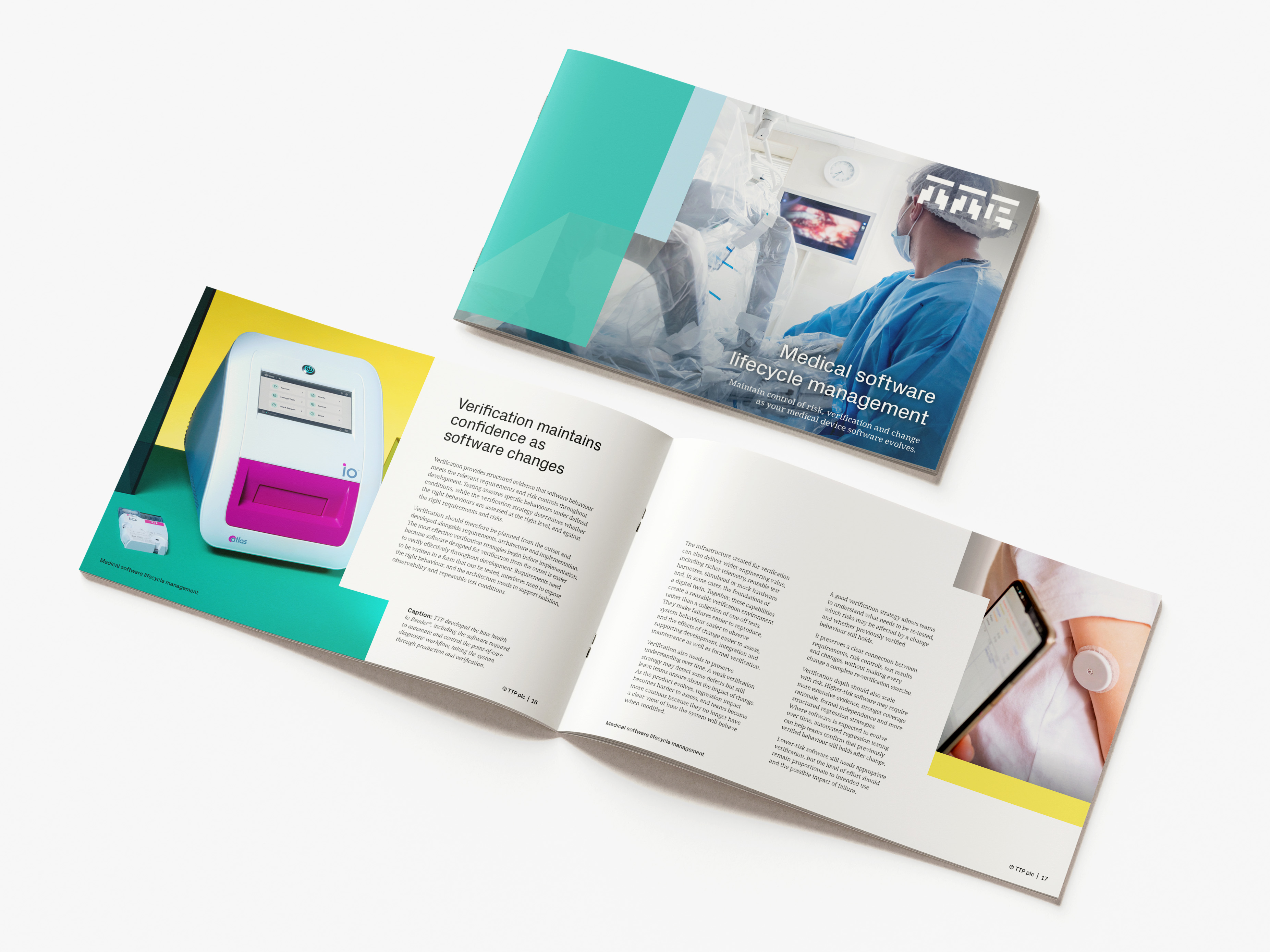
Read or download our medical software lifecycle management e-book to explore more practical insights from TTP, plus explore how to to confidently build regulated medical device software that evolves safely, predictably and defensibly over its lifetime. We explore:
- Balancing development speed and lifecycle rigour at different stages of a regulated software programme
- Designing software with verification and traceability in mind from the outset
- Maintaining confidence when requirements, risks and software change
- Addressing engineering risk at the interfaces and system boundaries
- Managing cybersecurity as a lifecycle concern
- Involving external partners in software development