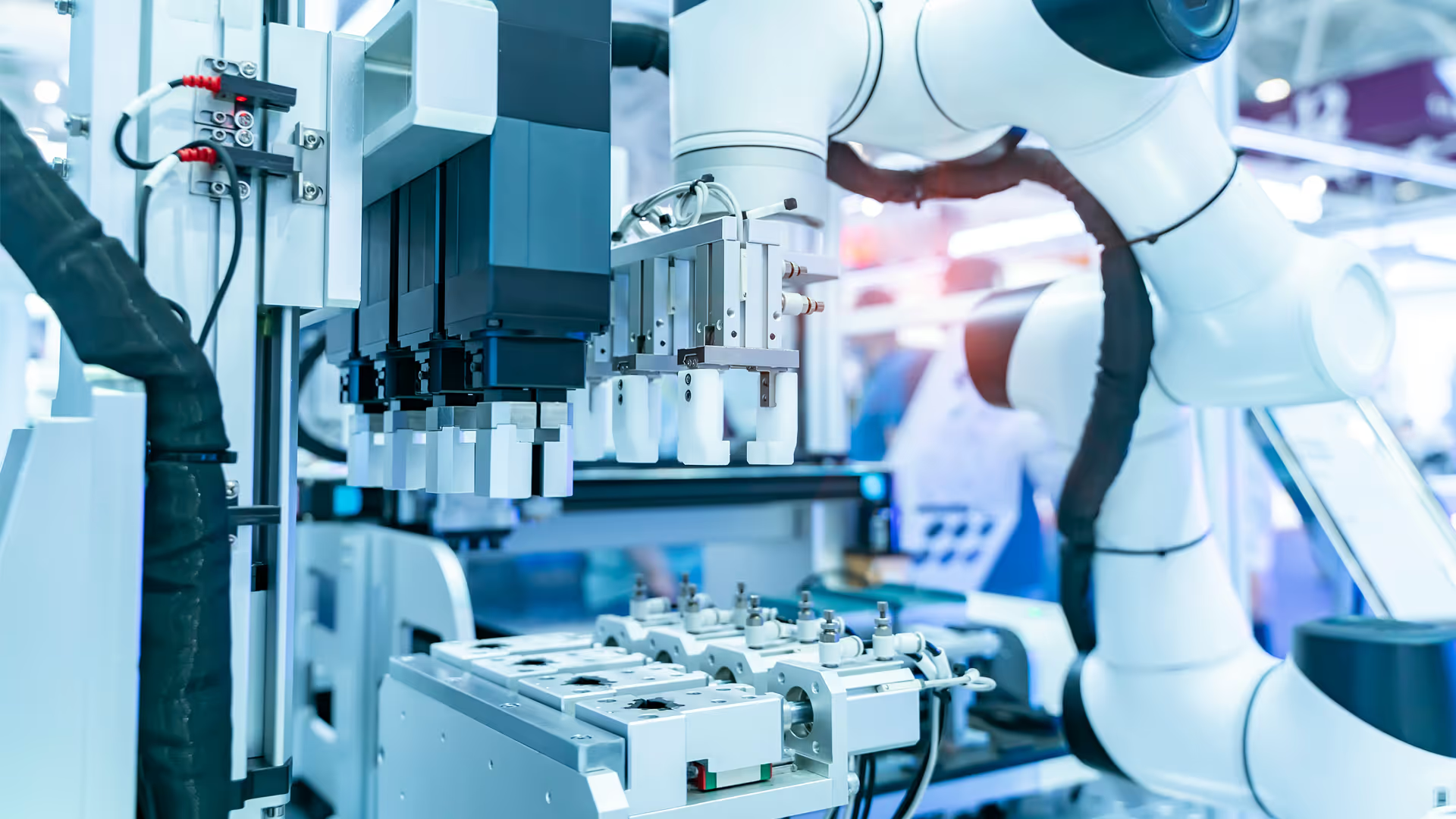
Accelerating DMTA
Building the next generation of drug discovery workflows
AI can design molecules faster than ever. Can your discovery workflow keep up?
Artificial intelligence is transforming drug discovery. New tools can generate, prioritise and optimise candidate molecules at unprecedented speed, dramatically expanding the number of compounds that can be explored during early-stage research.
But faster molecular design alone will not improve R&D productivity.
As AI accelerates the front end of drug discovery, new bottlenecks are emerging across the Design-Make-Test-Analyse (DMTA) cycle. Purification workflows struggle to keep pace with increasing synthesis throughput. More predictive biological models remain difficult to scale. And the traditional separation between chemistry and biology continues to slow the flow of experimental learning.
The next era of drug discovery will not be defined by AI alone. It will be defined by how effectively organisations redesign their discovery infrastructure to increase DMTA iteration velocity and turn more ideas into high-quality experimental data.
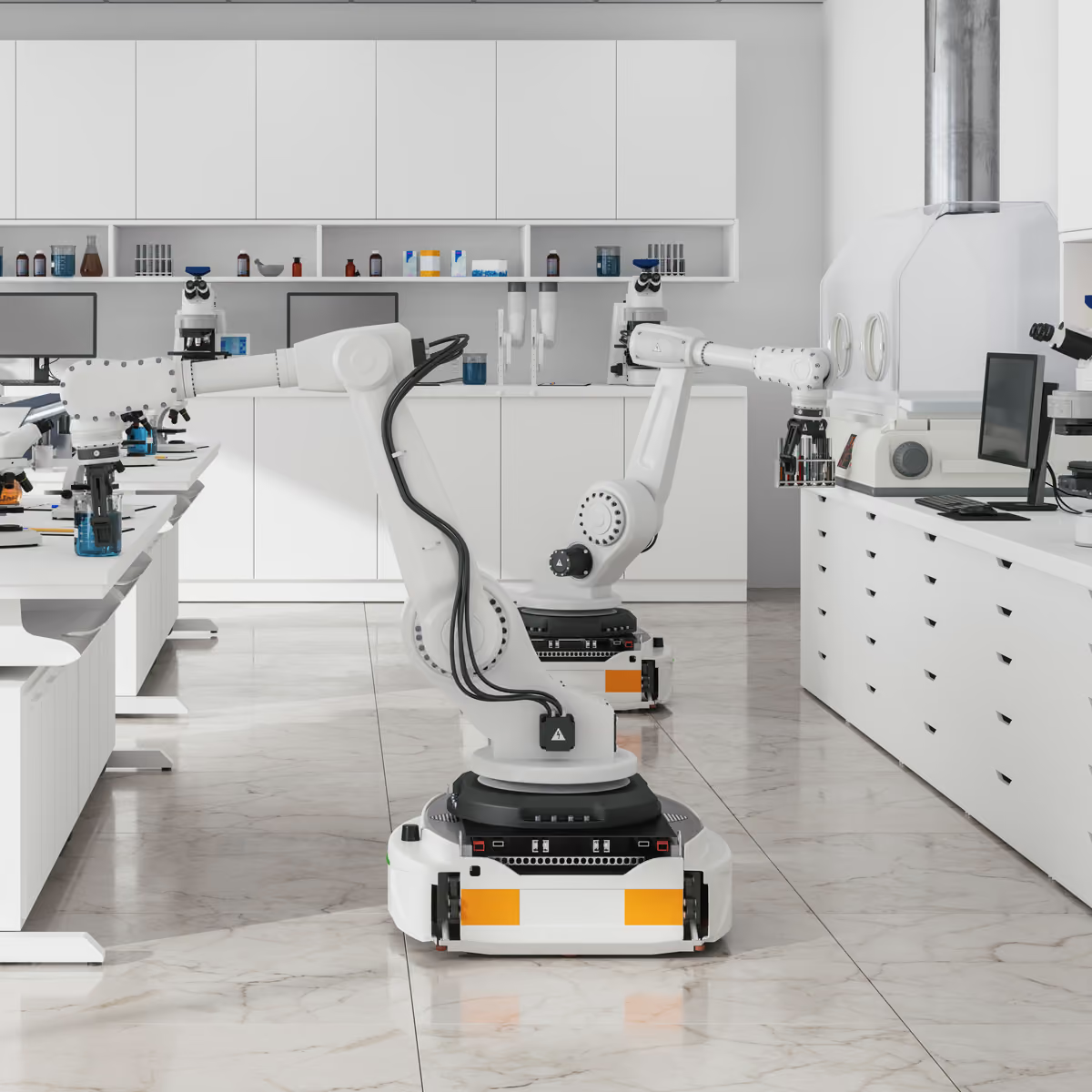
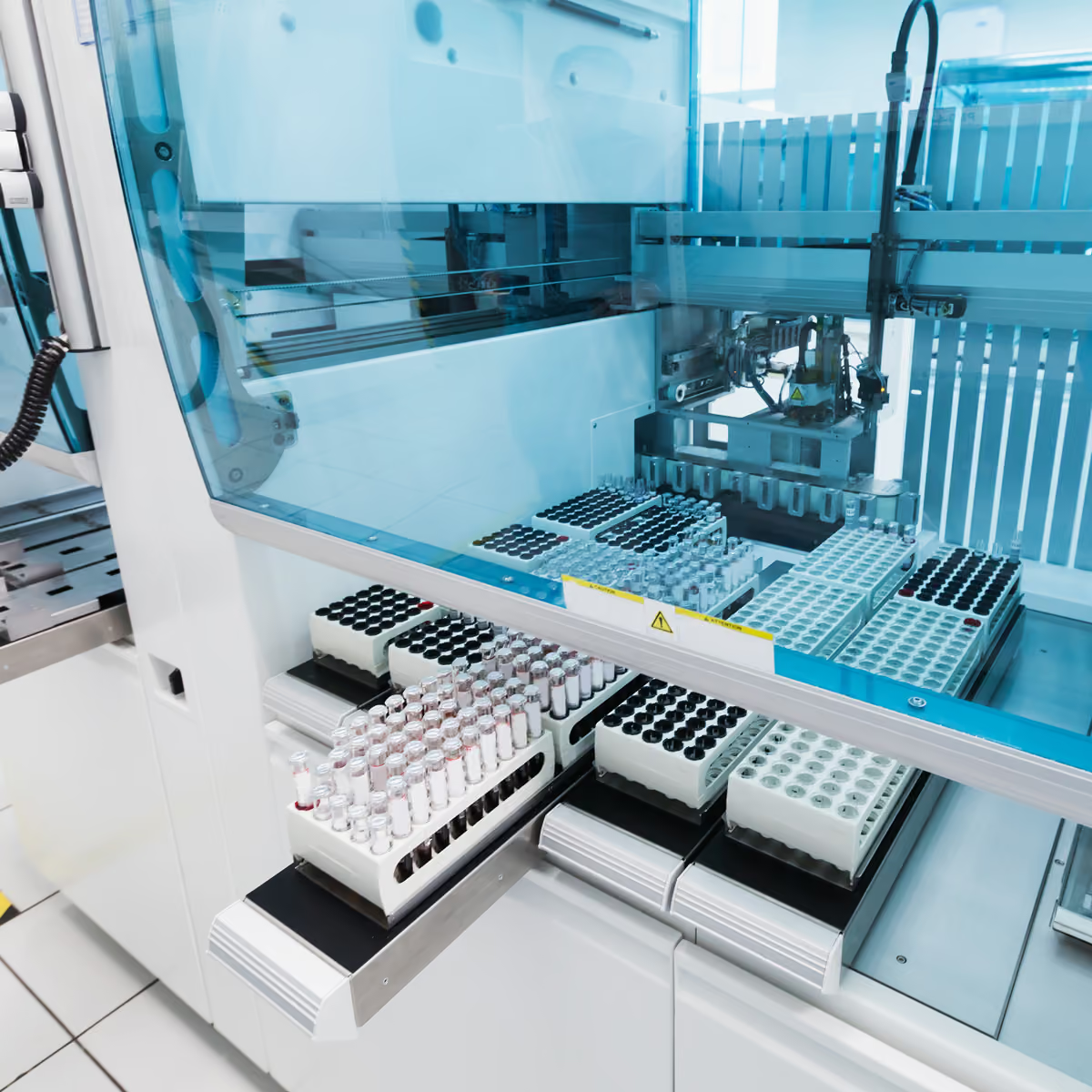
Building a future-ready drug discovery engine
Why productivity is becoming the defining challenge in DMTA
AI is increasing the pace of molecular design, but many discovery organisations still rely on workflows that were developed for a very different era of drug discovery.
This article explores why the industry's focus is shifting from generating ideas to increasing the speed and quality of experimental learning. It examines the structural, organisational and technological changes needed to create a future-ready DMTA engine capable of supporting AI-driven discovery at scale.
Key themes:
- Increasing DMTA iteration velocity
- Breaking down organisational silos
- Data-driven decision-making
- Future workflows for Make, Test and Analyse
Read: Building a future-ready drug discovery engine
Addressing purification bottlenecks in next-generation DMTA
Why purification may become the new constraint on discovery productivity
While chemistry, automation and AI continue to advance, purification remains one of the most stubborn bottlenecks in the DMTA cycle.
The challenge is no longer molecular separation itself. Modern chromatography systems are highly automated. Instead, the bottleneck increasingly lies in the manual handling, preparation and transfer steps that surround purification and prevent seamless workflow integration.
This article explores how automation, new materials-handling approaches and integrated workflows could transform purification from a bottleneck into an enabler of high-velocity drug discovery.
Key themes:
- Automation beyond chromatography
- Materials handling and workflow integration
- Flow chemistry and continuous processing
- Reducing or eliminating purification where appropriate
Read: Addressing purification bottlenecks for next-generation drug discovery

Delivering the promise of organoids in DMTA
Scaling human-relevant biology for industrial drug discovery
Organoids offer the potential to generate more predictive, human-relevant biological data earlier in drug discovery. They could help identify efficacy and toxicity signals sooner, enabling better decisions and reducing downstream attrition.
However, today's organoid workflows remain largely artisanal, making them difficult to scale for modern DMTA environments.
This article examines how automation, manufacturing principles and new storage approaches could transform organoids from specialist research tools into industrialised testing platforms capable of supporting future drug discovery workflows.
Key themes:
- Human-relevant testing models
- Organoid manufacturing and automation
- Quality, reproducibility and standardisation
- Generating better datasets for AI-enabled discovery
Read: Delivering the promise of organoids in DMTA
Breaking down the wall between Make and Test
Rethinking the interface between chemistry and biology
For decades, purification has acted as the boundary between chemical synthesis and biological testing. But advances in chemistry, automation, assay technologies and data science are challenging that assumption.
Emerging approaches such as direct-to-biology workflows, DNA-encoded libraries and miniaturised screening platforms are bringing chemistry and biology closer together, enabling faster feedback loops and more efficient exploration of chemical space.
This article explores how the traditional distinction between Make and Test may disappear entirely in future discovery environments.
Key themes:
- Direct-to-biology workflows
- DNA-encoded libraries
- Miniaturised screening systems
- Integrated chemistry-biology platforms
Read: Breaking down the wall between Make and Test
.avif)
Why better data, not more data, will determine the future of DMTA
Better decisions start with better data
Artificial intelligence and automation are transforming drug discovery, generating more compounds and richer experimental datasets than ever before. But as Design, Make, Test and Analyse workflows accelerate, the challenge is no longer collecting more data, it's ensuring that data is consistent, connected and ready to drive confident decisions.
This insight explores why data quality, interoperability and reproducibility are becoming the foundations of AI-enabled drug discovery, and how organisations can build decision-ready DMTA workflows that accelerate learning rather than simply increasing throughput.
Key themes:
- Why data quality matters more than data volume in AI-driven drug discovery
- The hidden impact of fragmented, inconsistent and poorly contextualised datasets
- Building reproducible, interoperable and decision-ready DMTA workflows
- Creating the data foundations for continuous learning and AI-enabled discovery
Meet us at


Our areas of focus:
Life Sciences
Our approach and capabilities
We deliver across the entire life of a project, from opportunity discovery to production engineering. Discover how our interdisciplinary teams of experts collaborate to tackle the toughest product development challenges.

Our campus and facilities
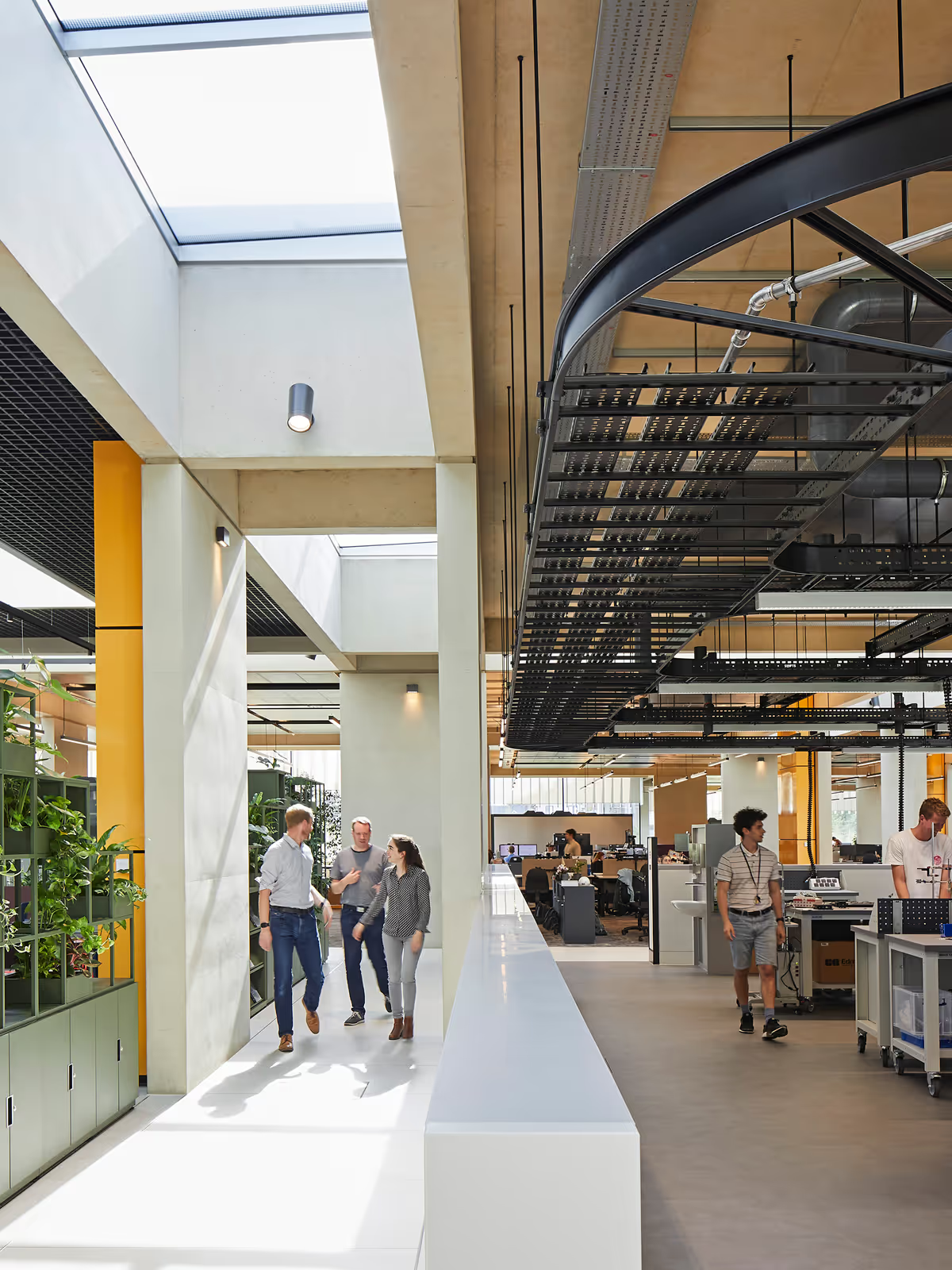
Our award-winning campus has been designed with a clear vision. To create space which can suport our people and our clients as we develop and deliver the very best technology solution.
Software capability at TTP
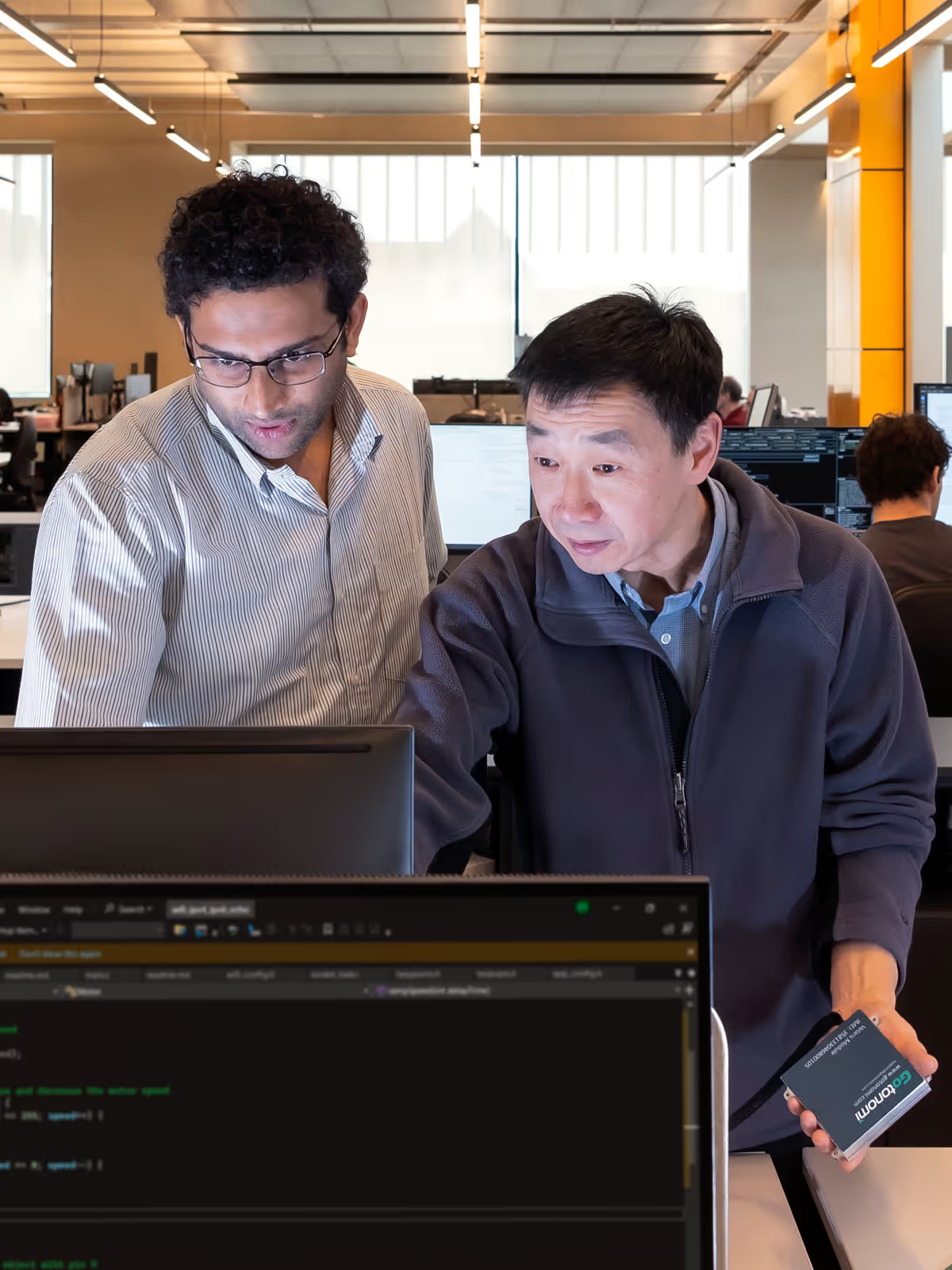
Engaged in all stages of software and product development, our software capability at TTP covers the full spectrum—from in-depth analysis and system architecture to prototype design, implementation, and test development.
Manufacturing capability at TTP
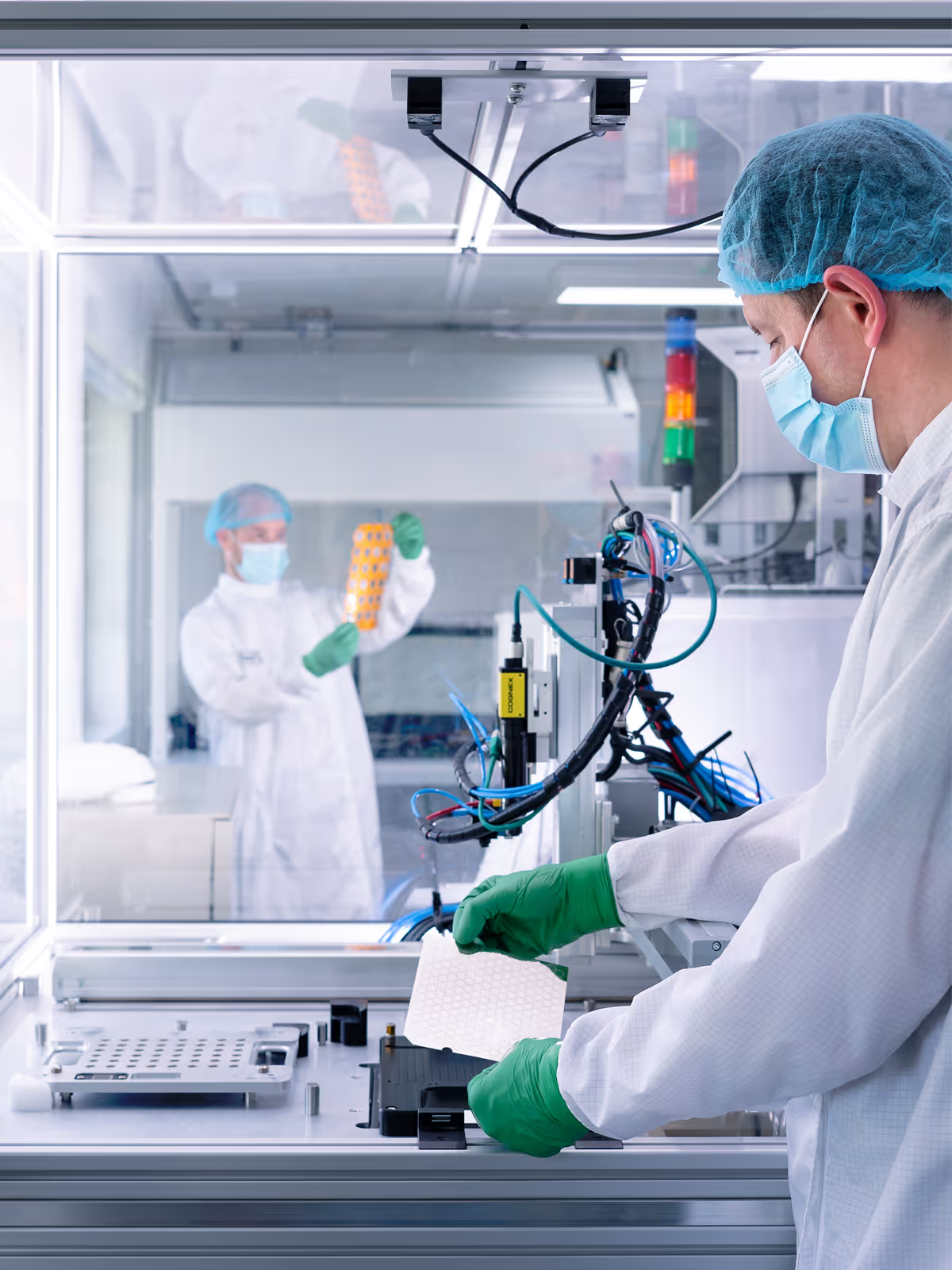
Working seamlessly with our development teams, we take clients' products through prototype builds, clinical trials, pilot manufacture and more. Using TTP Manufacturing reduces uncertainty, risk and time to market for our clients.
Meet some of the team

Wenshu Xu

Jon Wingfield

Greg Walkowiak
Talk to us about your next project
We help clients with all stages of their most complex and challenging technology and product development projects.
If you're considering the next steps along your innovation journey, why not get in touch?