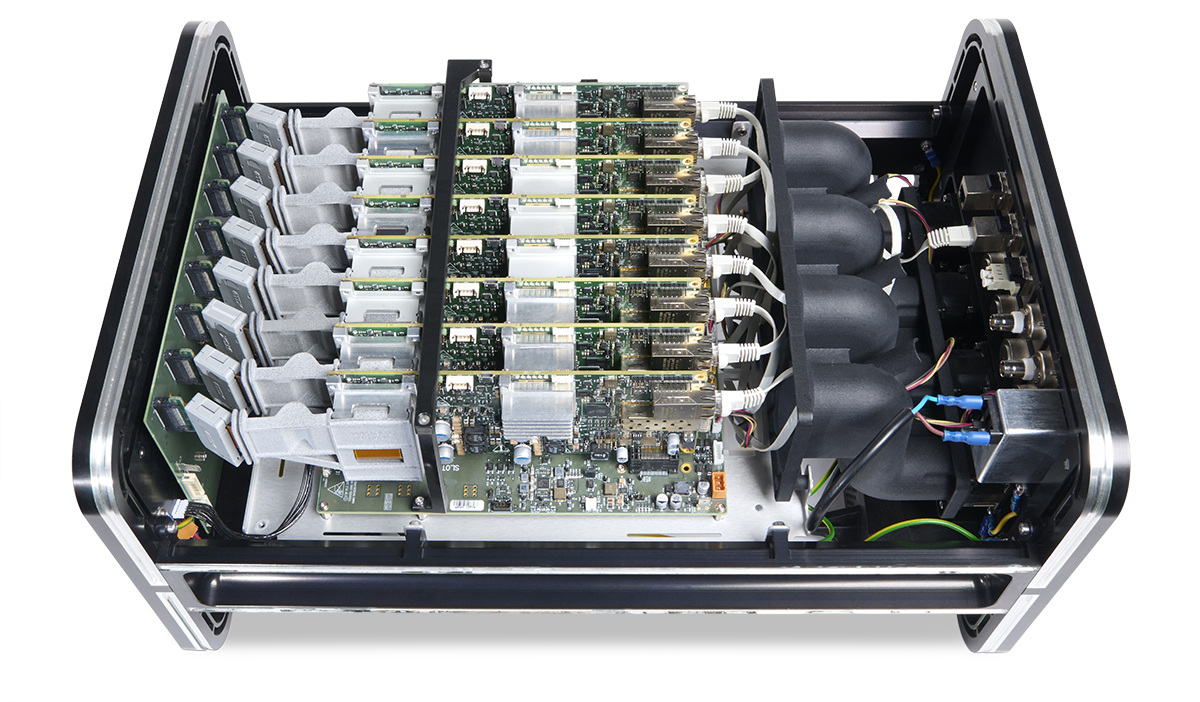
This e-book shares lessons from the development of a modular software-defined ultrasound platform, reflecting the technical challenges and architectural decisions encountered along the way. Drawing on several years of engineering work, it highlights practical insights that may be useful to teams designing new ultrasound systems or exploring alternative imaging approaches.
- What it takes to build a genuinely modular ultrasound system – lessons from developing an architecture that can scale channel counts and probe configurations without repeated redesign.
- How synchronisation decisions shape system flexibility – why precise timing and clock distribution become critical as modular ultrasound platforms grow in complexity.
- Where system architectures break down in practice – insights from troubleshooting noise, ground loops and component interactions that only emerge during real hardware integration.
- Designing control software that supports experimentation – how APIs and software architecture can enable flexible imaging research without overwhelming the user.
- Why iteration is essential in complex ultrasound platforms – what eight years of development revealed about refining architectures to support evolving research and product needs.
Read and download our full accelerating ultrasound development E-book here