In a constrained interventional medical device, integration does more than affect sensor performance.
Packaging, mechanical coupling, interconnects, device mechanics and calibration can change the measurement itself and may determine whether the required clinical information can be observed at all.
Adding sensing is therefore a system architecture problem, not a sensor-selection exercise.
The architecture needs to answer four questions:
1. What information will support the clinical decision?
2. Can that information be measured directly, or must it be inferred from something observable?
3. Can the sensing function be integrated without compromising the device’s primary function?
4. Can the resulting system be calibrated, verified and manufactured consistently?
These questions are tightly connected. A decision about where or how to sense may change the device mechanics, electronics, packaging, calibration strategy or even the original measurement requirement.
Start with the decision, not the sensor
Pressure, force, flow, contact and position do not, by themselves, define a useful sensing requirement. What matters is what the clinician or system needs to do differently with the information.
Detecting initial tissue contact, for example, is different from measuring absolute applied force. Confirming a procedural endpoint may require several complementary signals rather than greater accuracy from one sensor. In other applications, a threshold, trend or confidence measure may be more useful than a continuous numerical output.
That distinction drives requirements such as range, resolution, response time, uncertainty, sensitivity to confounding effects and failure behaviour.
It can also change what needs to be measured. The clinically relevant quantity may not need to be sensed directly: a proxy measurement, alternative sensor location or inferred state may provide a simpler and more robust architecture.
Sometimes relaxing a measurement requirement actually improves the product without reducing the clinical value of the information.
Design sensing as part of the complete system architecture
Sensor accuracy is not system accuracy.
The measurement chain is one part of the architecture:
Clinical state or quantity → observable signal or proxy →physical coupling → sensing element → signal acquisition → processing →clinical information
But that chain cannot be designed in isolation.
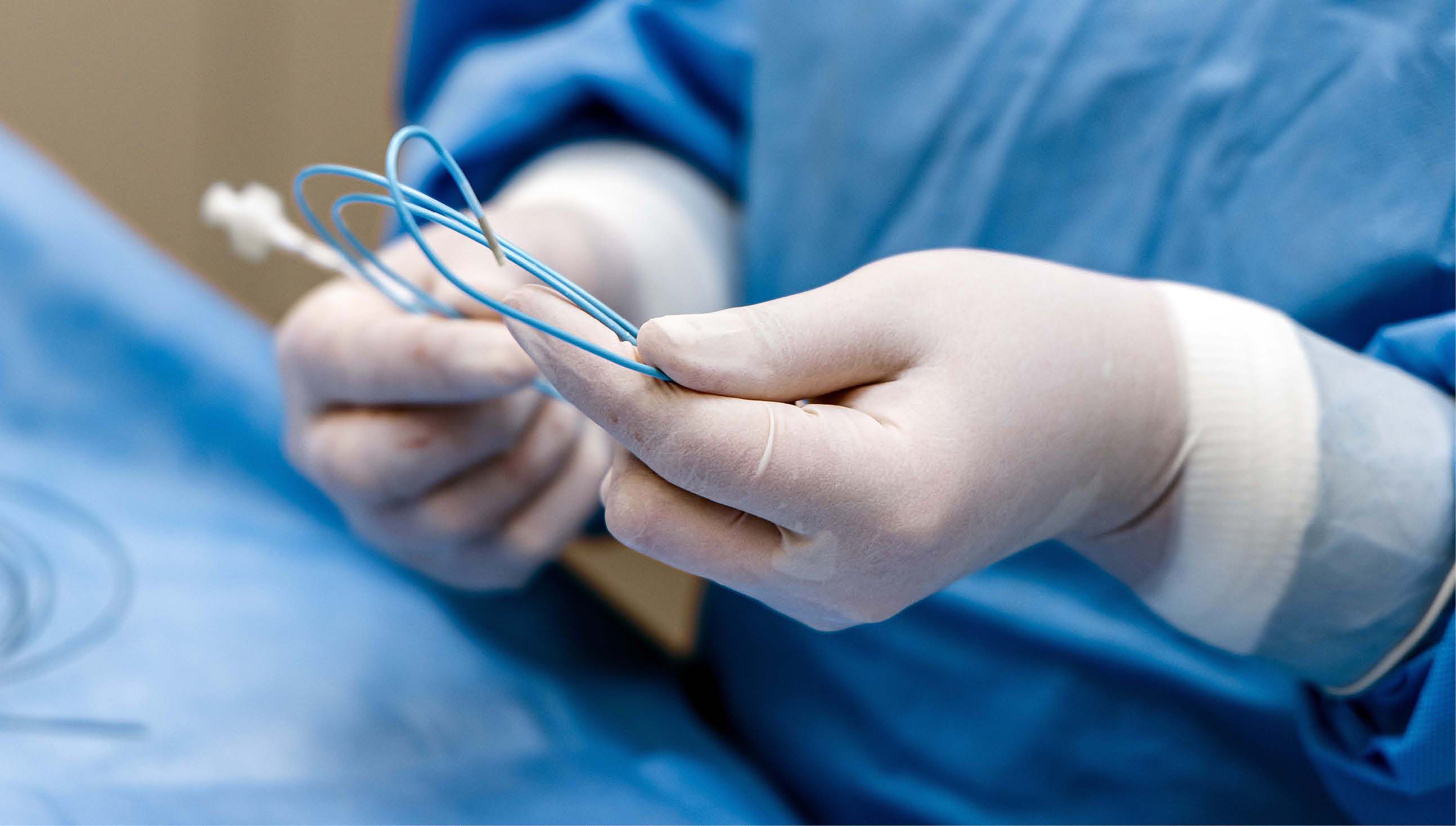
In catheters, guidewires and other constrained devices, the package and mechanical boundary conditions may become part of the measurement. A sensor with excellent datasheet linearity may develop offset or cross-sensitivity once bonded into a flexing structure. Shaft bending and friction can resemble distal force. Temperature, hydrostatic pressure and assembly stress can introduce offsets.
At the same time, sensing has to coexist with the primary device architecture. Conductors can affect diameter, flexibility and torque response. Optical fibres require stable interfaces and controlled bend radii. Distal electronics create constraints around power, heat, encapsulation and communications. Sterilisation, ageing and manufacturing tolerances can change performance further.
The challenge is to obtain the required clinical information without compromising device function or product viability.
This is why the sensing element, mechanics, packaging, electronics, software, calibration and manufacturing strategy need to be considered together rather than as sequential design decisions.
There may be no best sensing modality
Different sensing technologies often provide alternative routes to the same clinical information, but no single option is necessarily superior.
An optical approach may provide high sensitivity and electrical isolation while creating constraints around fibre routing, alignment and packaging. Electrical sensing may integrate more readily with electronics but be more sensitive to interference, tissue variability or fluid conditions. Mechanical sensing may provide a direct physical measurement while adding stiffness or responding to forces elsewhere in the device.
Different modalities often move complexity to different parts of the architecture.
The relevant comparison therefore extends beyond sensor performance to form factor, selectivity, mechanical impact, interconnects, power, calibration, sterilisation, manufacturability and signal interpretation.
In some cases, one modality gives the best overall architecture. In others, two complementary measurements can be more valuable than pushing one sensing technology to higher performance, particularly where they respond differently to important confounding effects.
And sometimes the architecture requires a sensing element that cannot be bought.
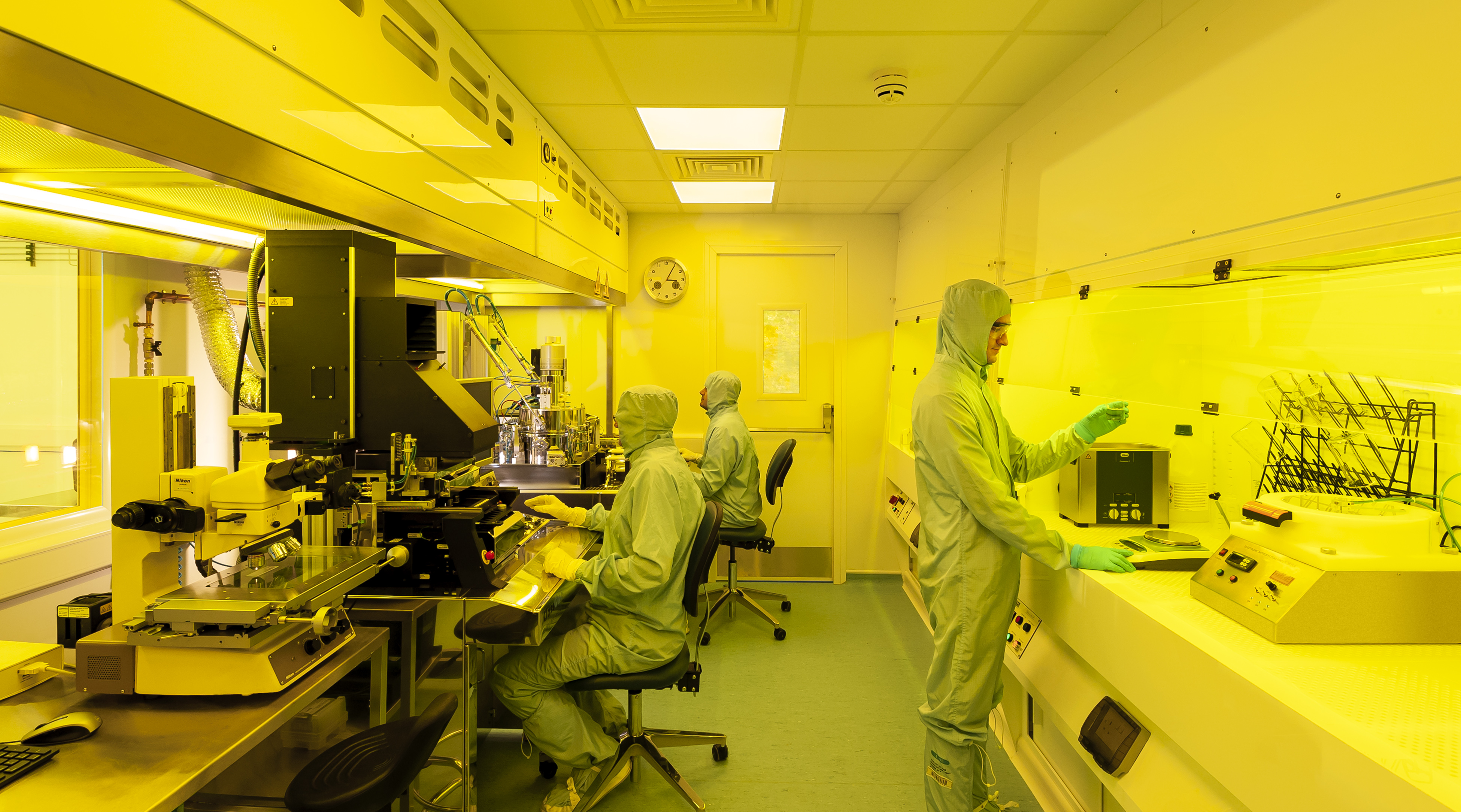
Where an off-the-shelf component imposes unacceptable constraints, changing the sensor itself may create a simpler overall system. TTP’s in-house microfabrication capability allows custom sensing structures and packages to be developed alongside the wider device, rather than forcing the device architecture around a fixed component.
The objective is not to develop a custom sensor. It is to find the simplest sensing architecture that can satisfy the product requirement.
Turn measurements into information that supports the procedure
A technically accurate measurement creates value only if it supports a decision.
More data does not necessarily improve a procedure. The useful output may be much simpler than the sensing and analysis required to generate it: a state, threshold, trend, confidence measure or confirmation that an event has occurred.
Converting measurements into clinically useful information may require artefact rejection, compensation, sensor fusion, event detection, model-based inference or data-driven classification.
Machine learning can be valuable where the relationship between the measured signals and clinical state is complex. It cannot compensate for an ill-defined sensing architecture, unrepresentative data or poorly understood failure modes.
The goal is not to expose everything the system can measure. It is to provide the information needed to reduce ambiguity in a defined procedural decision.
Use R&D to prove the product architecture
Early development does not need to answer every question. It needs to answer the questions that could invalidate the architecture.
A successful bench measurement may establish the underlying physics while leaving the important product risks unresolved. A force sensor may work on a rigid fixture but be dominated by shaft mechanics once integrated. A custom sensor may work on a wafer but change behaviour after packaging. An algorithm may perform well on curated data that the eventual device cannot reproduce consistently.
Early prototypes should therefore be designed around architectural uncertainty.
Typical questions include:
- Can the required information be observed under representative conditions?
- Can it be separated from the important mechanical or physiological confounders?
- Can the sensing function be integrated without compromising the device?
- Can the resulting system be calibrated, verified and manufactured consistently?
The purpose of an early prototype is not to maximise performance. It is to retire the uncertainty that could invalidate the architecture.
That may require a custom sensing structure, a representative section of the device, dedicated signal-acquisition electronicsor a test system that reproduces bending, torsion, temperature, pressure andtissue interaction.
The same thinking needs to extend into productisation. Calibration strategy, error budgeting, assembly tolerances and production test are easier to design into the architecture early than to retrofit once thesensing concept has been declared feasible.
A credible sensing architecture therefore needs not only to work — it needs a credible route to verification and manufacture.
How TTP helps
TTP brings sensing, mechanical, optical, electrical, software, data and microfabrication specialists together around the same system architecture.
Our project leaders work directly with those specialists and are empowered to make day-to-day technical decisions quickly. Clients tell us that this helps TTP resolve technical uncertainty faster than is often possible within larger internal organisations.
We can support programmes from clinical and technical definition through sensing architecture, custom sensor development, integrated prototyping, signal interpretation, calibration, early verification and transfer to manufacture.
Discuss your sensing challenge
Talk to TTP when the sensing requirement cannot be separated from the device architecture; whether the challenge is selecting between competing modalities, integrating sensing into a highly constrained device, developing a sensing element that does not yet exist, or establishing whether an early R&D concept has a credible route to product.