

TTP helped a major drug delivery device manufacturer turn a new manufacturing capability into two clinic-ready injection device designs. The devices combined intuitive usability, reliable delivery and consistent performance to support clinical progress with potential partners.
Context:
TTP partnered with a major drug delivery device manufacturer to develop two different injection device designs, enabled by a new manufacturing capability, into clinic ready devices.
Solution:
Through close collaboration between human-centred design experts, biomechanics specialists, and experienced medical device development engineers, TTP created two novel devices which combined reliable drug delivery and intuitive usability.
Result:
TTP’s client was able to progress clinical work with its potential partners using both of the devices designed by TTP.
Intuitively reusable and reloadable
Part of the value proposition for one of the devices TTP developed was reusability, with all of the usability challenges that it brings. How could the device be re-primed for the next injection in an intuitive way, while remaining within the physical capabilities of the intended user group?
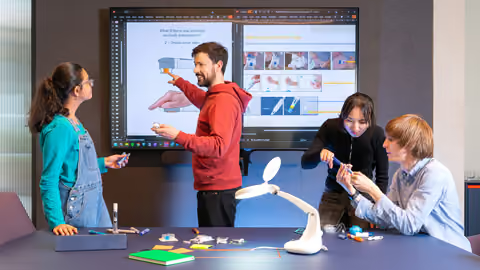
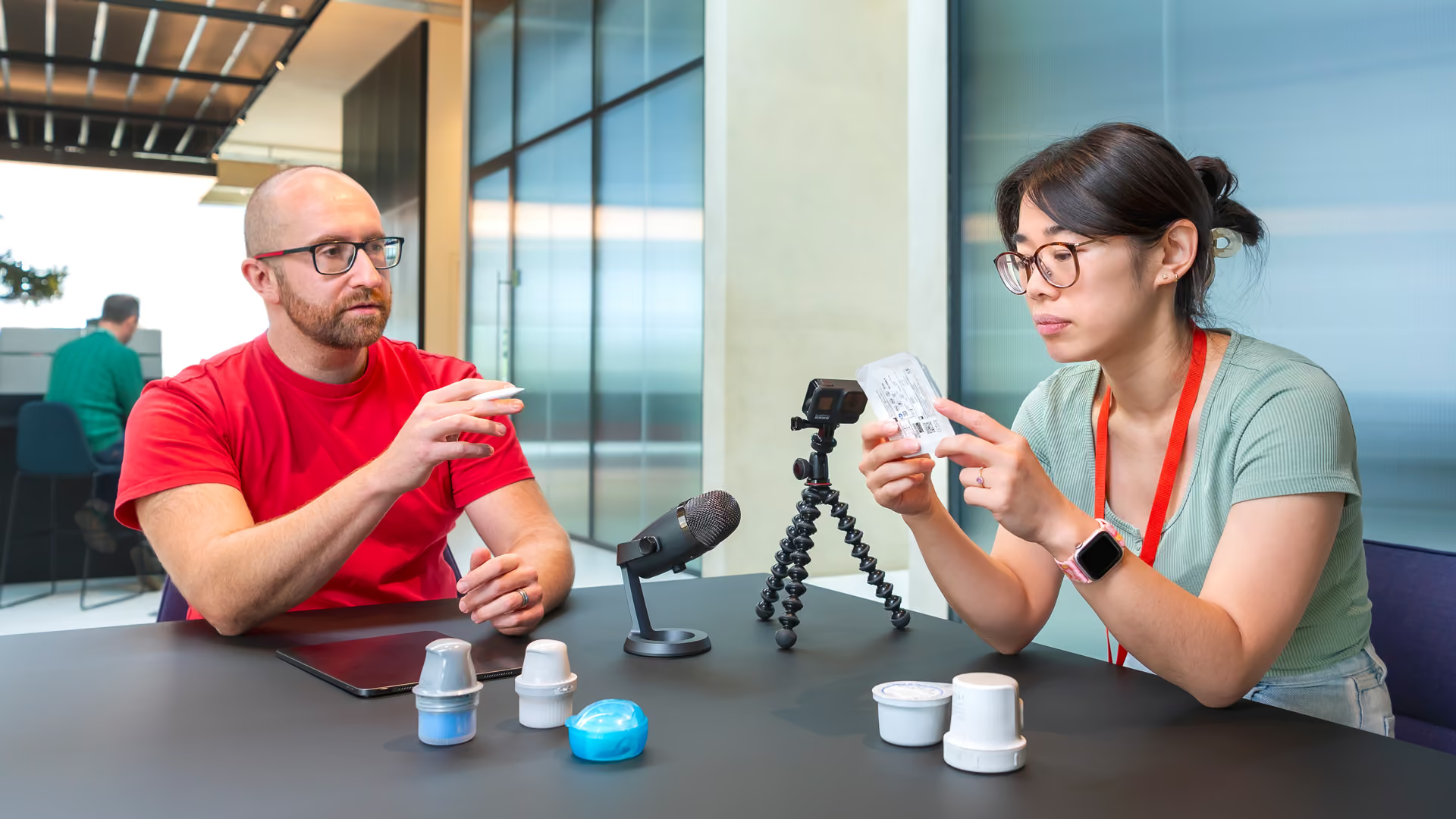
TTP’s human factors and mechanical engineers collaborated to identify viable outline approaches to repriming and reloading, before exploring them with users in a very early formative study. This highlighted which priming actions the target users were most comfortable with and capable of performing, as well as where the sequence of use might be unclear.
By iterating the design, including through further formative user studies, the team created a design in which order of events and orientation of refills were clear to naive users through design cues.
Medium-duration wear has particular needs
Infusions of up to around 15 seconds typically use a “stick” form factor, while infusions lasting tens of minutes usually involve a wearable device adhered to the skin as the user gets on with their day. TTP’s challenge for one of the devices was to develop a suitable form factor and actuation process for an infusion lasting one to two minutes, and to address the consequential design challenges.
While user engagement quickly showed that a “flat to the skin” approach was much superior to an autoinjector form for this time period, this orientation presented a number of issues. One of these was creating a sterile path from the primary container to the patient when the architecture made using a single fixed path impossible. Another very directive design challenge was making an infusion indicator which would be easily visible to users across a wide range of injection sites and body shapes.
The TTP team found solutions to both needs, packaging the whole design neatly to create a slimline device.
Reliable and consistent triggering
The client’s manufacturing innovation, which sparked these projects, required the needle insertion mechanism to be highly controlled and consistent. The level of control significantly exceeded the capabilities of a typical autoinjector trigger mechanism: the team had to create an extraordinary device capability at a very ordinary cost of goods.
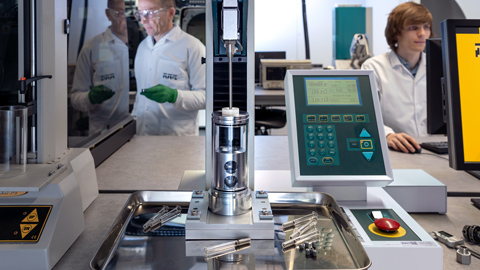
Achieving this involved tight integration of experiment, modelling, and design to identify the sources of variation, assess how they could (in principle) be reduced, and embody the solution in a robust, manufacturable way, using common materials and tolerances.
As a further challenge, one of the devices had to be useable by either the patient themselves or a carer, without any change in performance.
After detailed design, actuation, release, and travel had all exceeded the consistency requirements without the use of unusual or expensive materials or tight tolerance bands.
Conclusion
By combining human-centred design, biomechanical insight and rigorous engineering development, TTP helped its client turn a new manufacturing capability into two clinic-ready injection device designs. The work enabled the client to demonstrate reliable delivery, intuitive use, and consistent performance, supporting clinical progress with potential partners.