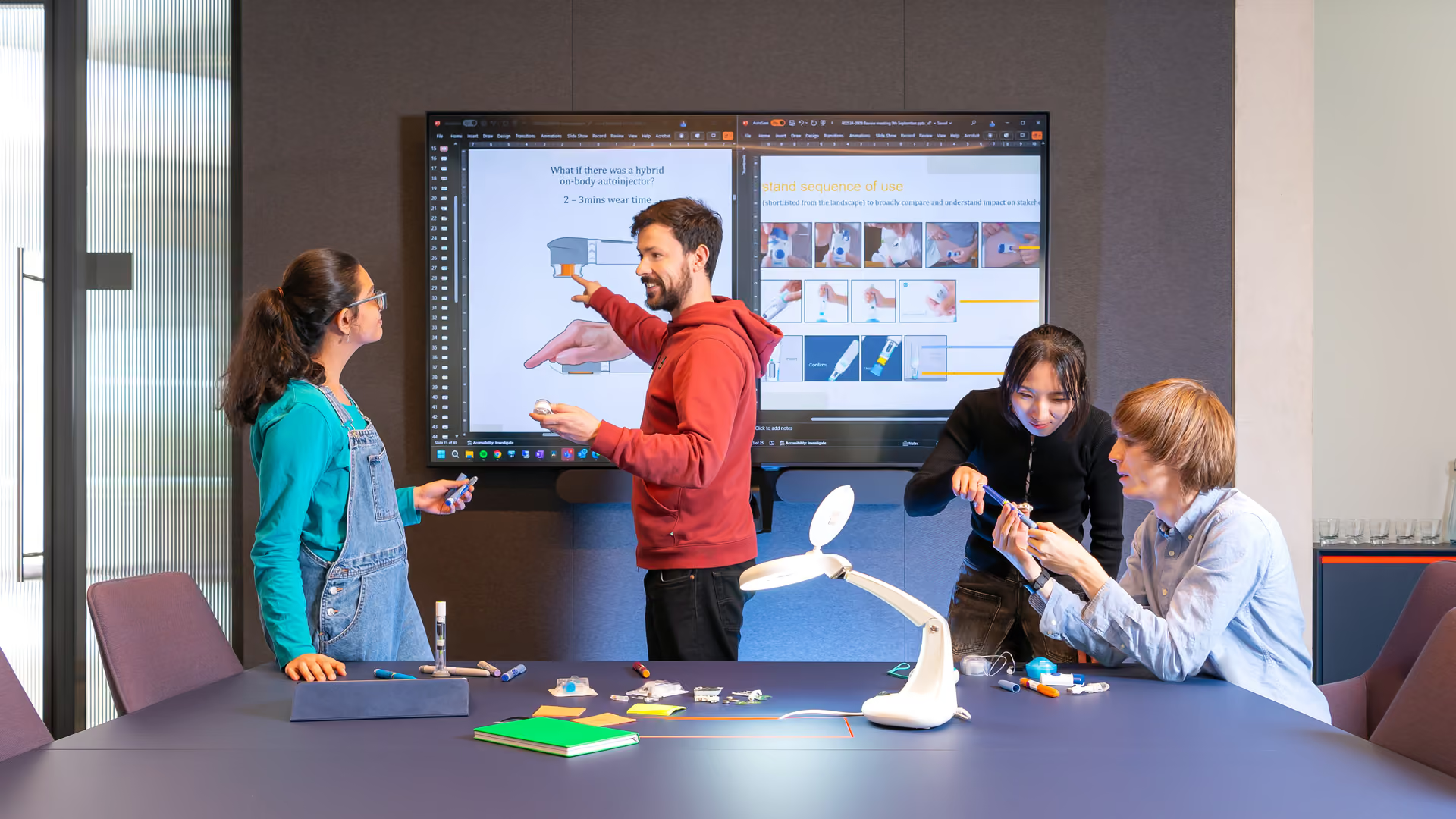


TTP helped a major pharma company assess how its injection device portfolio could evolve for larger dose volumes, lower carbon footprint and reduced user burden.By combining early technical definition, quantitative assessment and high-realism models, TTP enabled evidence-based decisions on which device concepts to develop further.
Context:
TTP partnered with a major pharma company to explore how the client’s injection device portfolio could be developed to meet foreseeable product needs with larger dose volumes, reduced carbon footprint, and reduced user burden.
Solution:
Beginning with the outline value propositions the client had prepared for its stakeholders, TTP created several product and technical archetypes for each device category. The team then evaluated each option in terms of capabilities, costs, carbon footprint, and usability, before recommending an approach for each type of device.
Result:
TTP’s work helped its client assess potential additions to its injection device portfolio and make confident, evidence-based choices about what to develop further.
Quantitative estimates on outline designs
Since the purpose of the work was to enable portfolio decisions, reliable estimates of performance, cost, and carbon footprint were needed - in advance of any detailed design work.
To enable this, TTP’s team included a range of experienced product development engineers - from human factors and product design through mechanical and electronic engineering to manufacturing - to produce outline designs quickly, using reference designs or comparable features in existing launched devices to illustrate what a complete version might look like in practice. This materially mitigated the main risks of early cost and carbon footprint models: missing out major contributors.
Drawing on experience across device categories, the team was able to bring the right, multidisciplinary skillsets together early and assess the complex trade-offs between usability, manufacturability, cost, carbon footprint, technical risk, and system architecture before detailed design began. This early assessment also rapidly indicated where standard - and therefore low-risk - engineering approaches supported the value propositions, and where novel approaches were valuable to develop
It also rapidly indicated where standard - and therefore low-risk - engineering approaches supported the value propositions, and where novel approaches were valuable to develop.
Use complexity analysis
Quite apart from ease of use, confusion or difficulty in using a device at home can result in calls to healthcare professionals, so the TTP team put considerable effort into analysing the user workflow for each device type.
In addition to structured formative discussions with stakeholders, this involved quantitative assessment. The team refined user step-counting methodologies - which are notoriously subjective and hard to standardise - into a more consistent approach for assessing both the number of steps and other characteristics, such as familiarity, repetition, and complexity to enable just comparisons to be made.
Since simplicity of user sequence is typically achieved through some increase in design complexity, a robust way of assessing use complexity enabled thoughtful trade-offs to be made between different aspects.
High-realism models for high-level discussions
Once TTP and the immediate client team had narrowed down possible device choices to a few for each device type, the challenge became one of communicating the considerations effectively to the most senior decision makers.
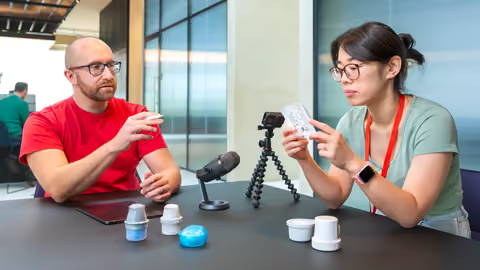
As well as producing succinct, grounded summaries of the options and their characteristics, the TTP team created high-fidelity models with correct materials and weighting, as well as semi-functional user interfaces and handling features. This gave stakeholders an immediate and accurate impression of what using the alternatives might be like in practice.
Conclusion
By combining early technical definition, quantitative assessment, usability analysis, and high-realism models, TTP helped the client move from broad portfolio ambition to evidence-based decision-making. The work gave senior stakeholders a clearer understanding of the trade-offs between performance, cost, carbon footprint, usability, and technical risk, enabling them to prioritise the device concepts with the strongest potential for further development.