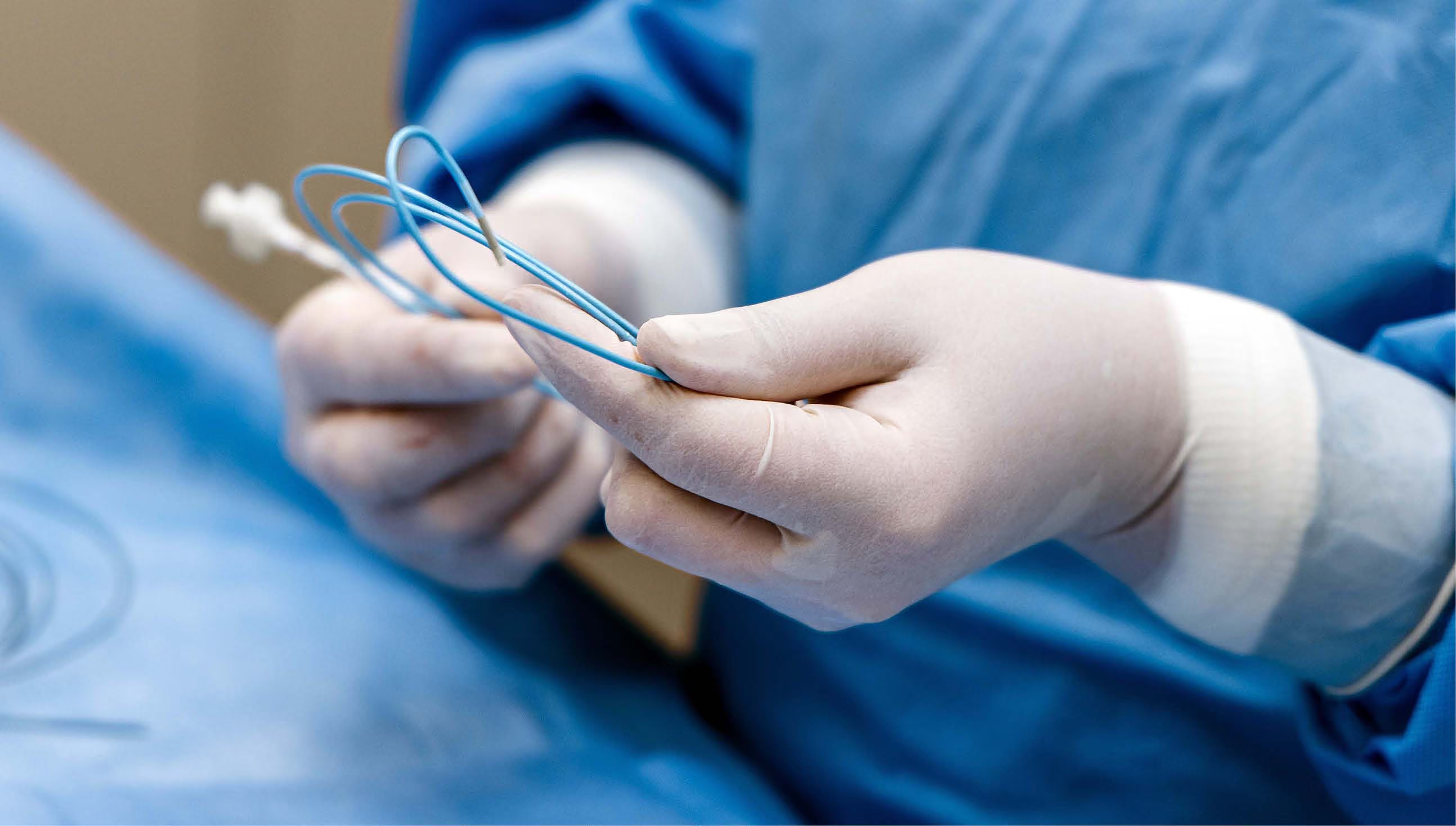
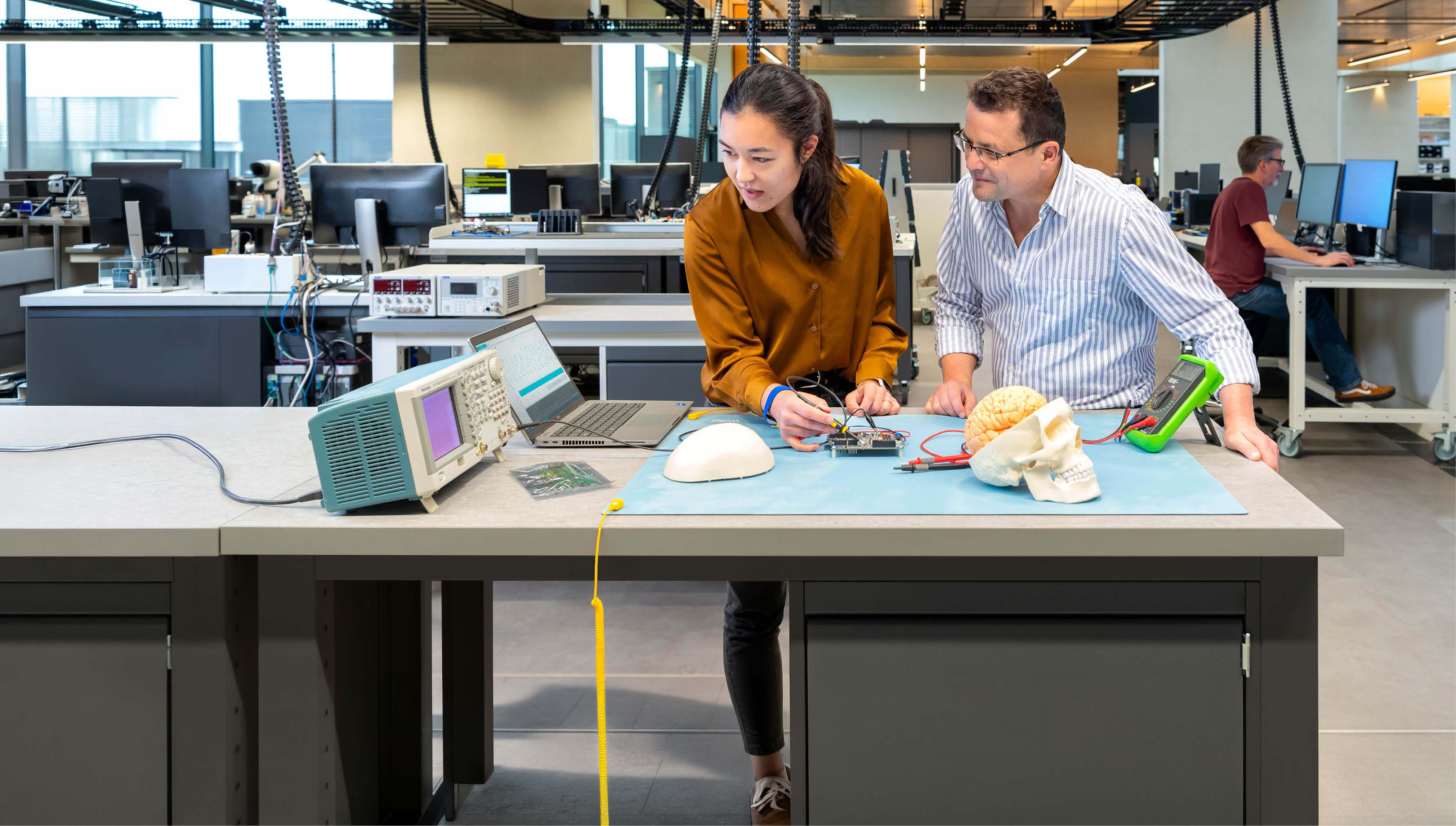
Ask any MedTech team what they'd change about theirprogramme, and it's usually something decided in the first few months. That'soften what separates a smooth path to clinic from costly redesign.
That's because architecture, regulation, connectivity and testing are all tangled together, and early choices echo through everything that follows.
Our teams at TTP work across every one of these areas, fromMRI-safe implants and ultrasound to regulated cloud and biosensor testing, sowe've pulled together seven practical guides and e-books to share what we'velearned. Dip into whichever fits your project – none require a form fill.
Scaling and automating biosensor testing for continuous health monitors
As biosensor development scales, efficient, repeatable and reliable testing becomes increasingly important and difficult to do at scale. Explore how automated fluidics, high-throughput testing, cloud-hosted data and analysis tools can accelerate CGM sensor development while creating a robust repository of development data.
Modelling MRI-induced RF heating in implantable leads
For active implants with long conductive leads, assessing MRI-induced RF induced heating can quickly become a significant development bottleneck. Explore how computational transfer-function modelling can streamline ISO 10974 Tier 3assessment, reduce repeated phantom testing and enable faster design iteration.
Sensing in interventional medical devices
Integrating sensing into minimally invasive medical devices is more than a sensor-selection challenge. Explore how a system architecture approach, considering device mechanics, electronics, packaging and calibration, can help developers achieve clinically useful measurements without compromising device performance, manufacturability or reliability.
Optimising BLE connectivity in implantable CGMs
Reliable Bluetooth connectivity from inside the body creates difficult trade-offs between antenna size, power, signal strength and tissue effects. See how modelling, prototyping and testing can be combined to develop robust wireless performance within the constraints of an implantable CGM.
Tackling invisible risks of cloud-connected medical devices
Connecting a medical device to the cloud creates an evolving ecosystem spanning device software, connectivity, cybersecurity, data and long-term operations. Discover the engineering challenges that often emerge beyond the prototype –and how to design for them from the outset.
Integrating ultrasound into a medical device – lessons from the coalface
Whether you’re exploring how ultrasound could fit into a new medical product, or already developing ultrasound systems yourself, we’ve drawn on eight years’ experience developing a software-defined ultrasound system. We share lessons in modularity, synchronisation, scalability, integration and designing for experimentation.
How much regulatory rigour is necessary and sufficient?
Regulatory requirements don't have to slow you down. This guide explores how regulatory thinking can inform early design and architecture decisions, reduce the risk of costly redesign and help create a more credible path towards clinical studies and commercialisation.
About TTP
TTP's HealthTech team helps medtech teams solve toughscientific and engineering challenges where the solution isn't always obvious.
With 300+ engineers, scientists and designers on one campus,we reduce risk early by bringing together multidisciplinary teams with theexpertise and autonomy to make decisions quickly, develop solutions with feweriterations and keep programmes moving.
With extensive facilities including cleanrooms, labs andsmall-batch manufacturing, we design, build and de-risk, from first principlesthrough to clinical feasibility and transfer to manufacture.
We are 100% employee owned, technology- andfactory-agnostic, meaning our recommendations are guided by what's right forthe product, not by equity or partnerships.
The result is technology designed not just to work in aprototype, but to perform reliably, scale effectively and create a clear pathto commercial viability.