Sensor integration in minimally invasive devices
Developing advanced sensing systems for next-generation catheters and interventional devices
Bringing together the right expertise around your sensing challenge
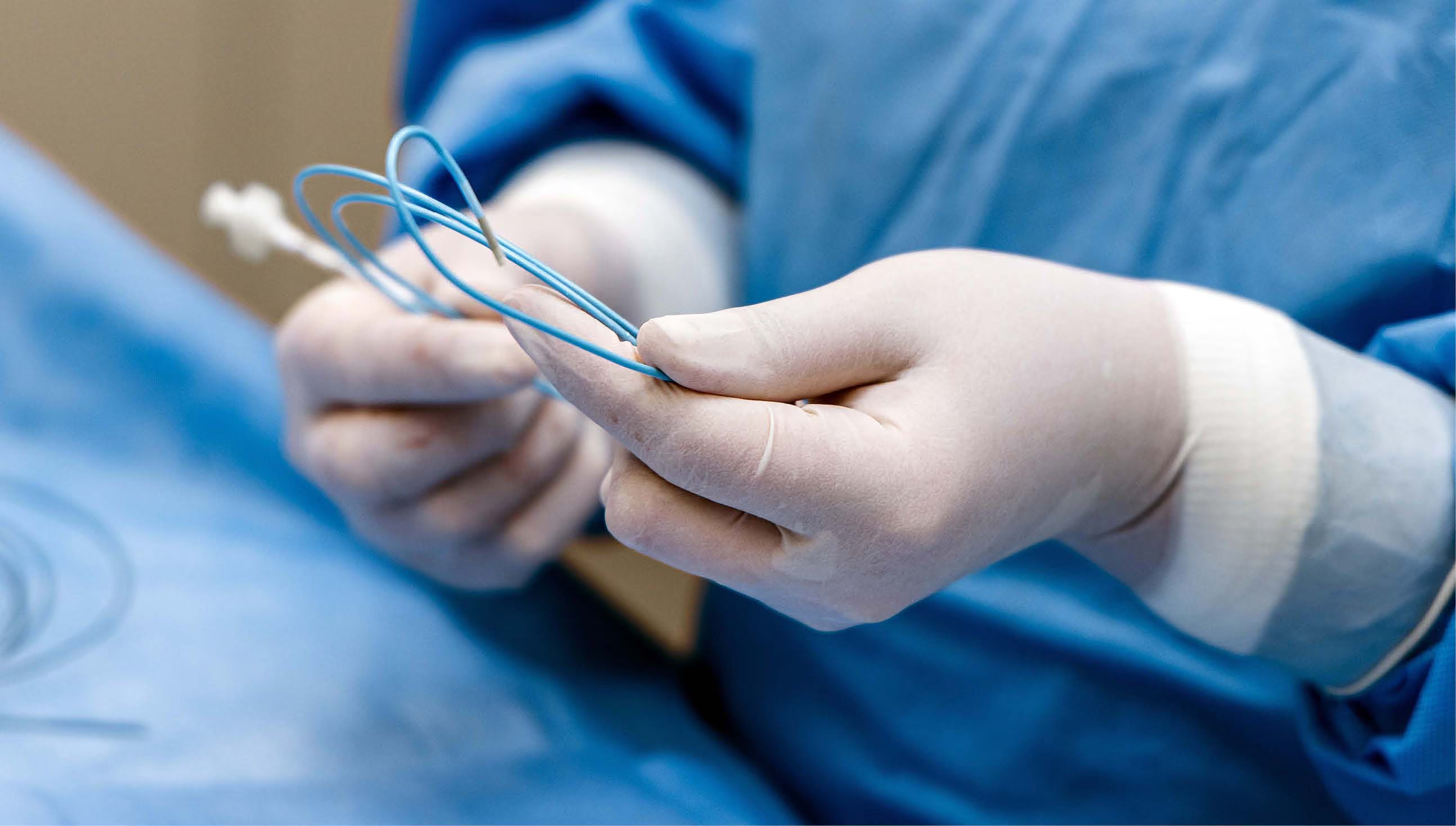
If you are looking to introduce more sophisticated sensing capabilities into next-generation endovascular catheters and other minimally invasive devices, it is important to consider how the sensing technology will work within the wider device system.
Whether measuring pressure, force, flow or tissue contact, the sensing technology must operate within tight physical constraints without compromising the device's primary function. Device mechanics, electronics, software, clinical use and manufacturing requirements all influence which approach will work best.
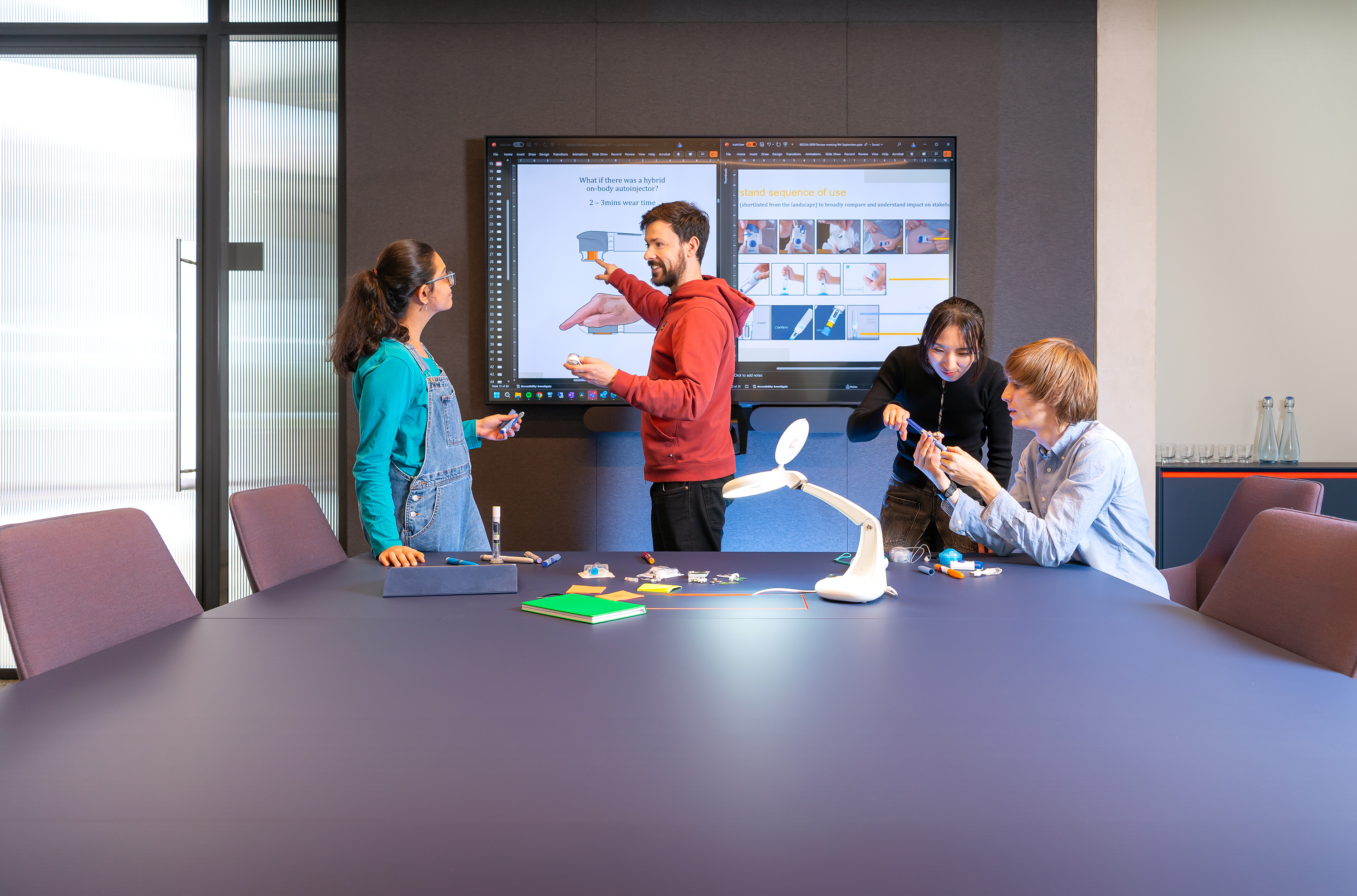
TTP brings specialists in sensing, physics, mechanics, electronics, optics, software, human factors and microfabrication together on one campus.
Our teams move quickly from exploring approaches to building and testing them, resolving technical uncertainty through rapid, focused iterations.
From defining what to measure to developing custom sensors and proving an integrated architecture, we turn complex sensing challenges into viable medical solutions.
Defining the right sensing architecture
A successful sensing system starts with the decision it must support, not a predetermined technology. We work with you to understand who needs the information, when in the procedure, and what it changes for them. That may show that the most useful measurement differs from the one first considered, or that a state, trend or threshold serves the clinician better than an absolute number.
Because the form of feedback can change the sensing requirement, we treat the user interface as part of the architecture, and design sensing alongside what the device already has to do mechanically, not into the space that remains.
For example, when developing a smart catheter, the challenge may be to provide clinicians with information about contact force or tissue interaction at the distal tip. This raises questions about whether the measurement needs to be made directly at the tip, whether it can be inferred from other signals, and how the sensing approach affects the catheter's flexibility, handling and overall performance.
From the outset, we consider:
- Clinical information needs, and how the clinician will use them
- Direct, indirect and inferred sensing approaches
- Sensor location, form factor and physical coupling
- Mechanics, handling and workflow, including whether sensing changes the interaction being measured
- Calibration, verification and manufacture
Selecting and integrating the right sensing technology
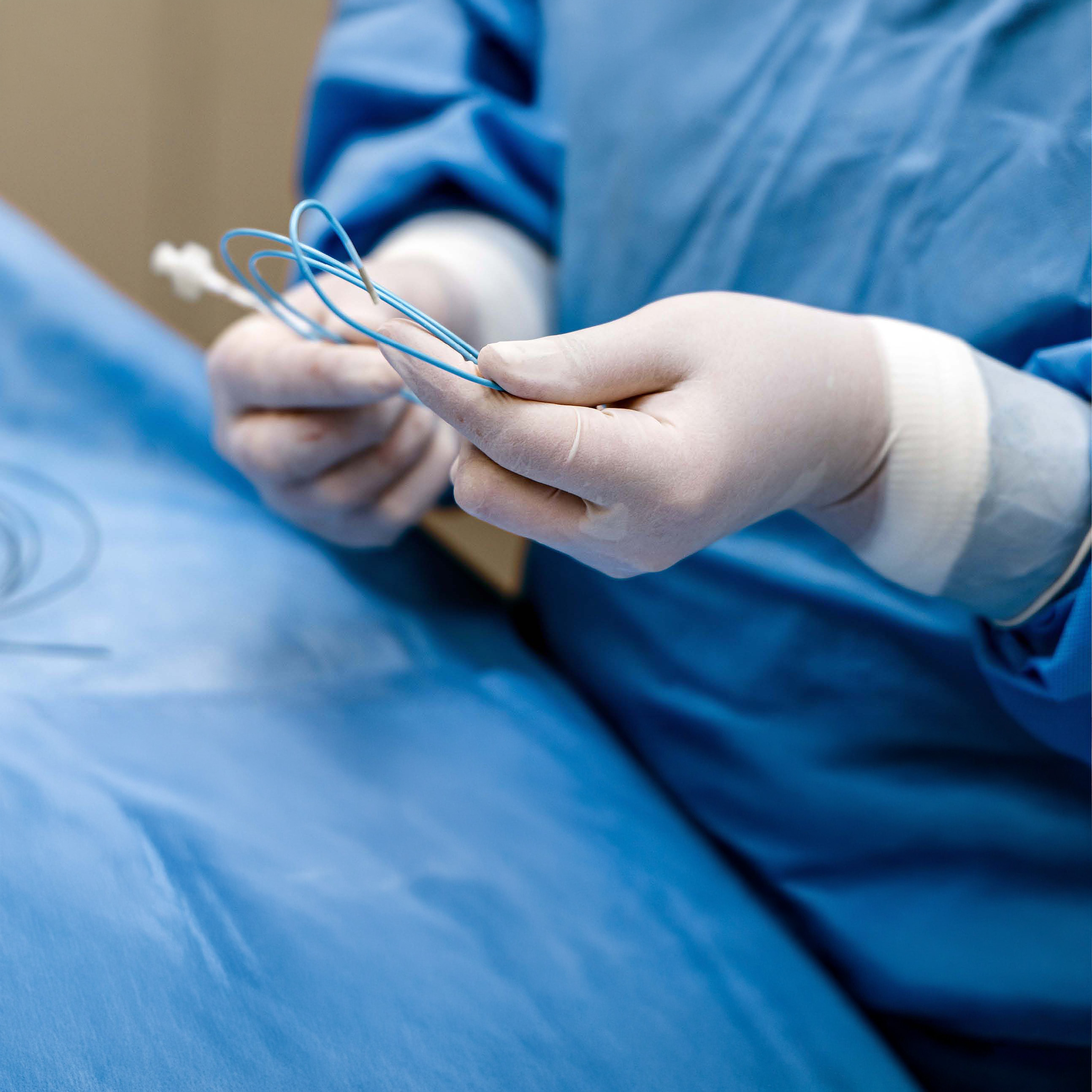
There is rarely a single “best” sensor. Different technologies move complexity to different parts of your system.
We draw on technologies and expertise from beyond medical devices, including optical systems, communications, aerospace and industrial sensing.
We compare genuinely different concepts against the whole product from the outset, using analysis, modelling and targeted experiments to test the assumptions that could overturn each one, so we converge without prototyping every option. This includes:
- Comparing concepts on whole-system criteria: packaging, mechanics, power, interconnects, calibration, sterilisation and manufacturability
- Error budgets and signal-to-noise estimates to show what really dominates performance
- Simple bench rigs built around a single architecture-driving uncertainty
- Signal acquisition, processing, multi-modal sensing and sensor fusion in catheters and other constrained devices
Developing custom sensors when off-the-shelf isn't enough
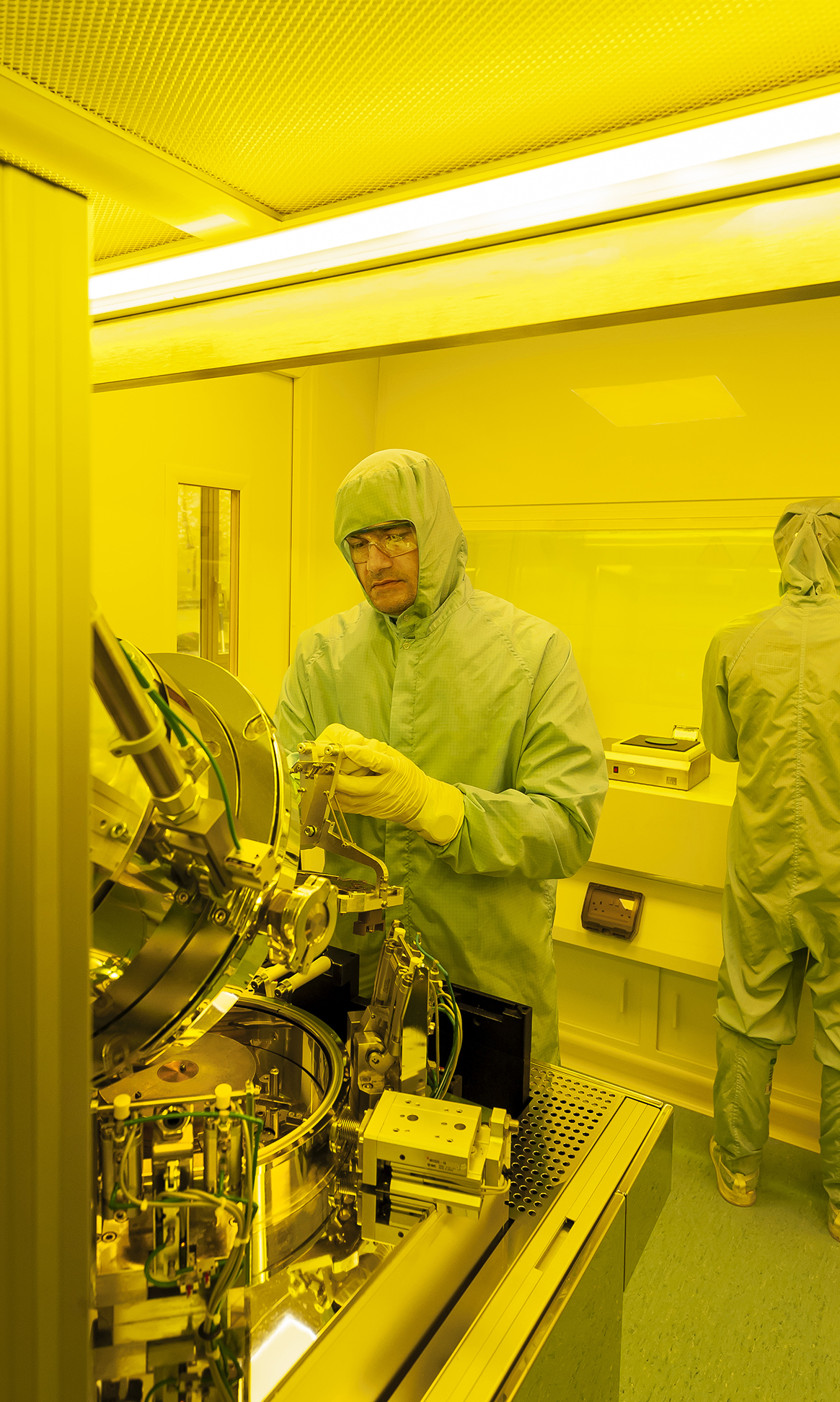
Often the right sensing principle exists, but not in a form your device can use. The commercial package may be the wrong size, thickness or geometry, or the established implementation may not fit: a planar optical waveguide rather than a conventional optical fibre, for example, or two modalities combined in one small package.
We intervene at whatever level the architecture needs, from adapting an existing component to developing a new sensing structure, and we build and test the structures, packaging and processes on our own campus while the wider architecture is still evolving. The aim isn’t custom technology for its own sake, but the simplest architecture that meets the need.
Our capabilities include:
- Adaptation, thinning and repackaging of existing sensors
- Custom electrodes, coatings, encapsulation and interconnects
- Optical, MEMS and microfabricated structures, and custom transducers
- Integration of complementary modalities, such as optical and electrical, in a single package
- Rapid fabrication and process development, taken far enough to hand an understood process to your manufacturing partner
Proving the sensing system is ready for product development
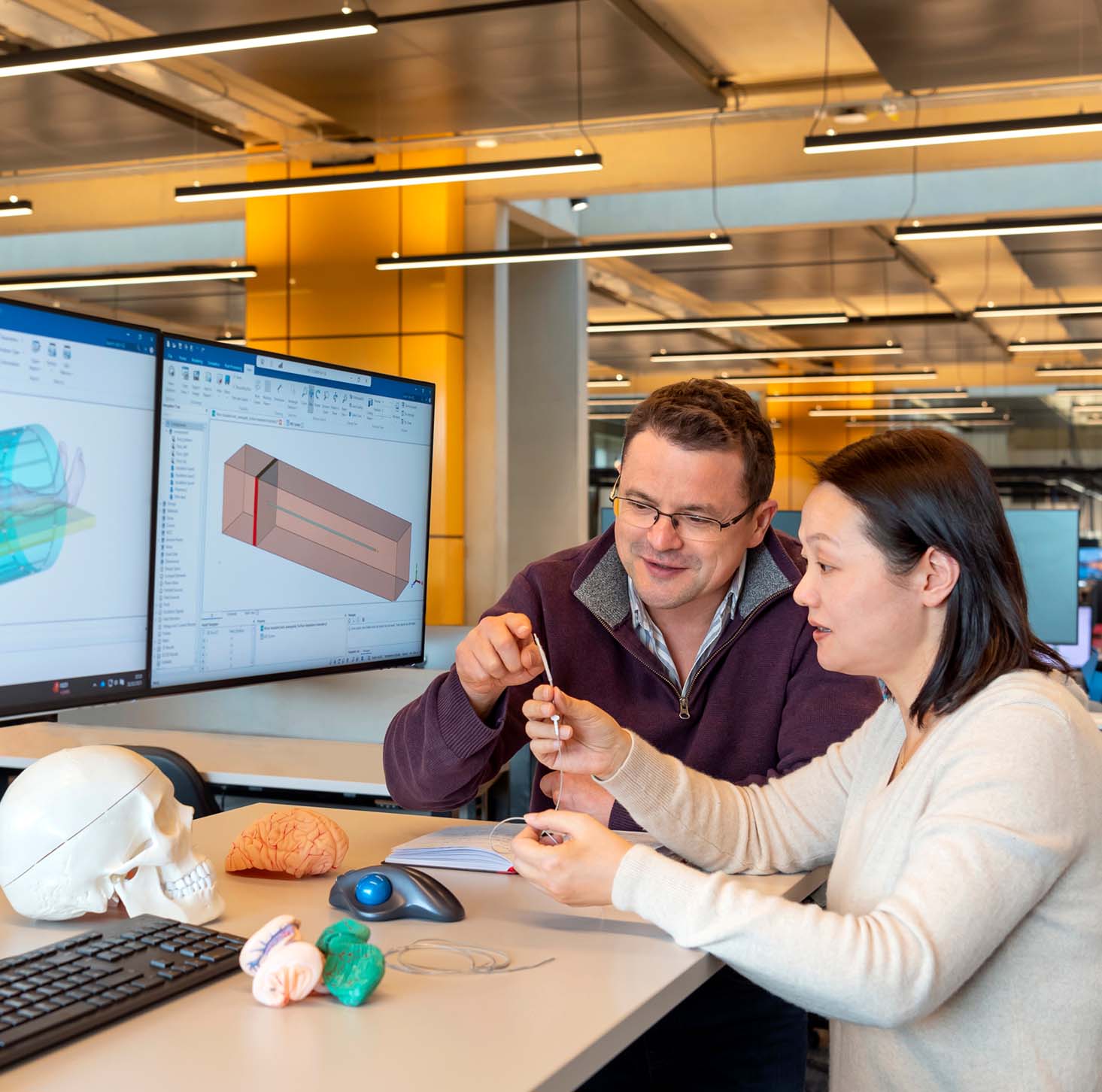
A successful prototype demonstrates feasibility, but not necessarily product viability. Once an architecture is chosen and feasibility is shown, the standard of evidence has to rise: performance must belong to the architecture, not to one favourable build, test setup or dataset.
We introduce variation deliberately, using independent builds, different operators and setups, and representative conditions, to see what survives. The aim is to retire the uncertainties that could invalidate the architecture and plan for those that remain, so the next stage of investment goes into product development rather than more feasibility.
This can include:
- Representative prototypes and system testing, made representative only where it matters to the decision
- Margin against the requirement, error budgets and sensitivity analysis
- Device-to-device variation, confounders and repeatability across independent builds
- Ground truth, data quality and independent evaluation to assess algorithm robustness and identify spurious correlations.
- Calibration, drift, temperature, sterilisation and ageing effects, and interference from RF and electrosurgical sources
- Route to verification, production test and manufacture
Meet us at

Our areas of focus:
Medical Devices & Drug Delivery
Our approach and capabilities
We deliver across the entire life of a project, from opportunity discovery to production engineering. Discover how our interdisciplinary teams of experts collaborate to tackle the toughest product development challenges.
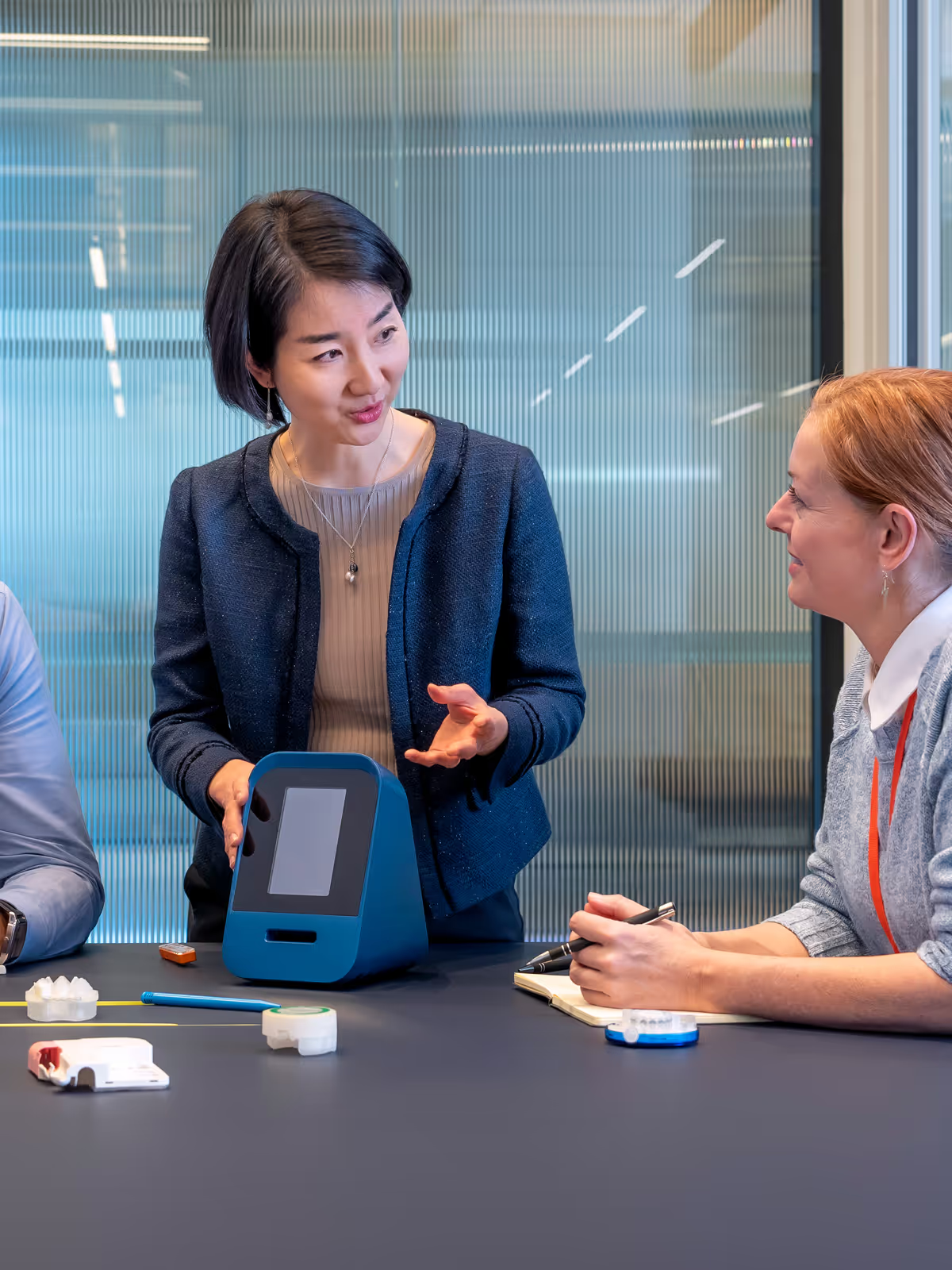
Our campus and facilities
Our award-winning campus has been designed with a clear vision. To create space which can suport our people and our clients as we develop and deliver the very best technology solution.

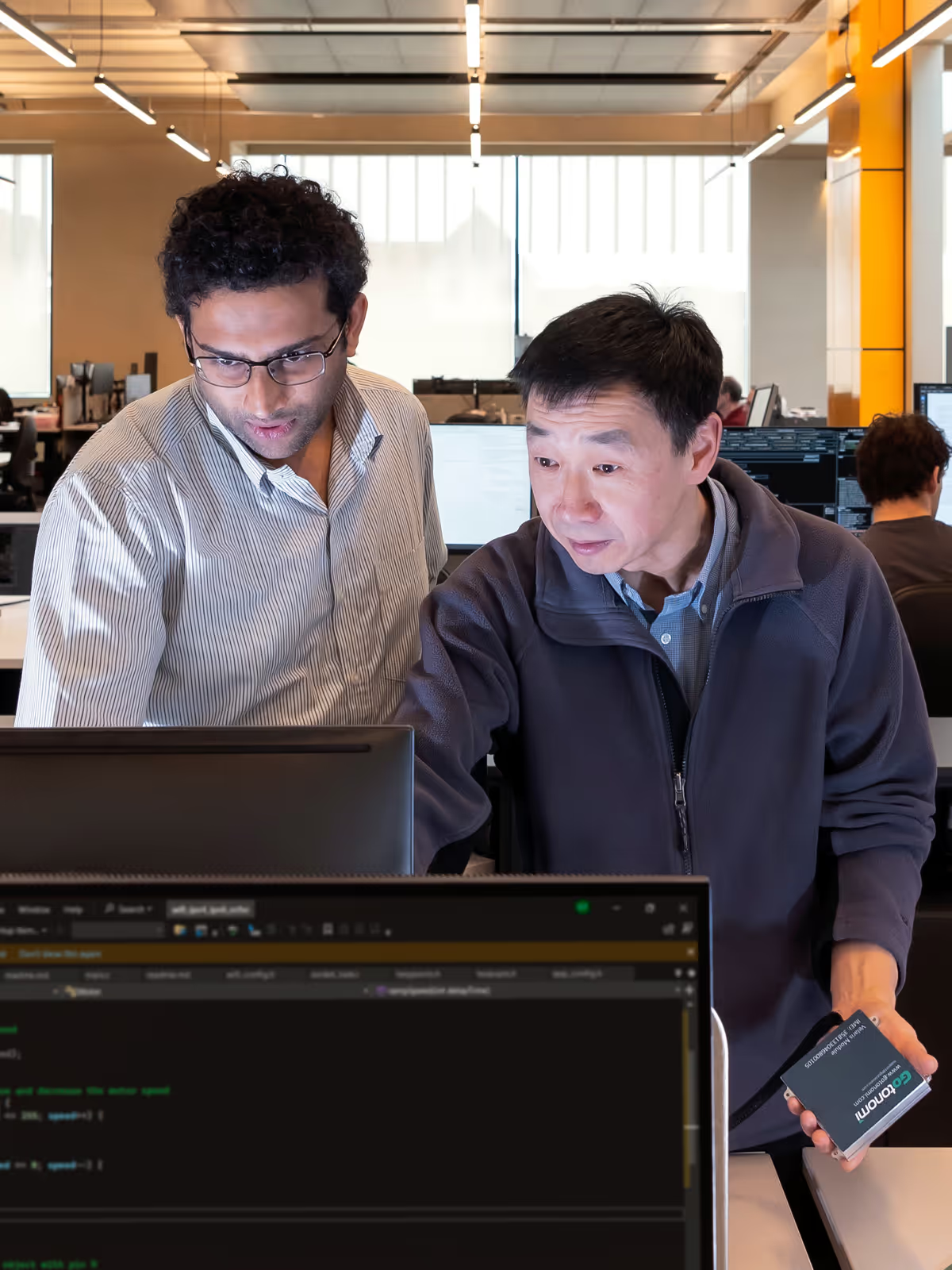
Software capability at TTP
Engaged in all stages of software and product development, our software capability at TTP covers the full spectrum—from in-depth analysis and system architecture to prototype design, implementation, and test development.
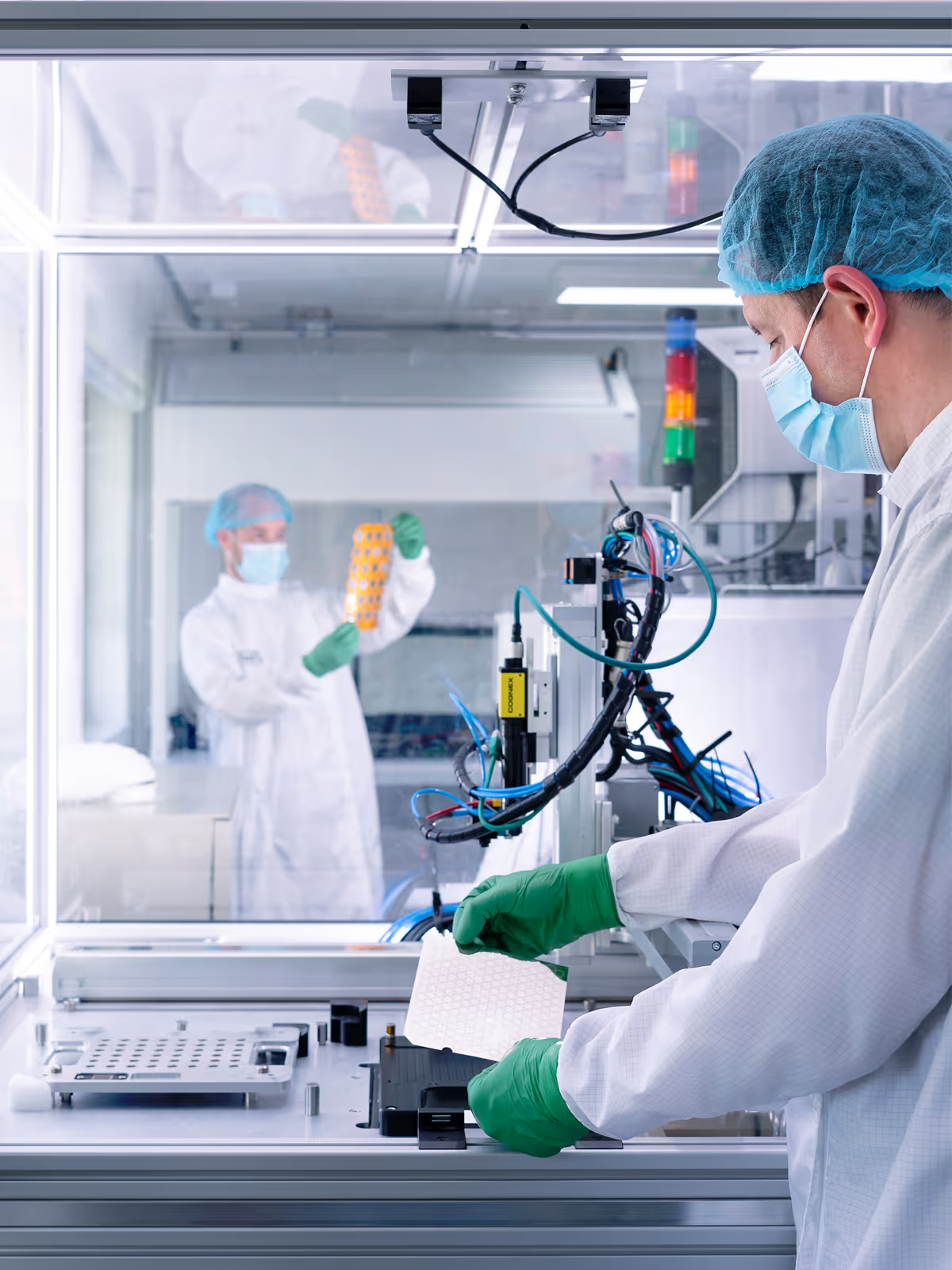
Manufacturing capability at TTP
Working seamlessly with our development teams, we take clients' products through prototype builds, clinical trials, pilot manufacture and more. Using TTP Manufacturing reduces uncertainty, risk and time to market for our clients.
Meet some of the team
Talk to us about your next project
We help clients with all stages of their most complex and challenging technology and product development projects.
If you're considering the next steps along your innovation journey, why not get in touch?